
Well, most people would just Ctrl-F the word they are looking for in the Annual Report.
Everyone laughed, because we all did that. Especially with a long annual report.
It was refreshing to hear Eileen Chong, the Lead for Insights and Innovation, at the Asia Philanthropy Circle, poke the elephant in the room – that we’re so tired, and we often just skip the long parts, and get down to the quick and dirty.
Because yes, all of the programmes at your charity are important, but in a time-starved Singapore, we often just don’t have time to go through the long preamble.
So if you’re looking to do your annual report this year, let me show you some of the best I’ve seen, which have also created some of the best impact for charities. Of course, you might ask,
Why bother? Does anyone even read these?
Well, I would tell you that the people who pay the money, will read it.
Your donors and government funders will want to know that you at least look professional
If you’re expecting a government or a donor to donate $1000, then it would be hard for you to expect that they would not even bother reading what you do, in-depth.
I owe Allkin (previously AMKFSC) a debt of gratitude. In my years out of the social services, in the deep wilderness, both Chun Yat (now DCEO of Allkin) and Hilyah, were one of the few who were willing to meet and mentor me in any significant way. I know they want to do many things, and we’re lucky to have them solving some of the stickiest problems in Singapore today.
Lessons from Allkin on Annual Reports that work
What has also been a priority for them is understanding how to best communicate the work they do. In their tender briefing document, they wrote about how both their previous works required high resources, but ultimately was low in impact.
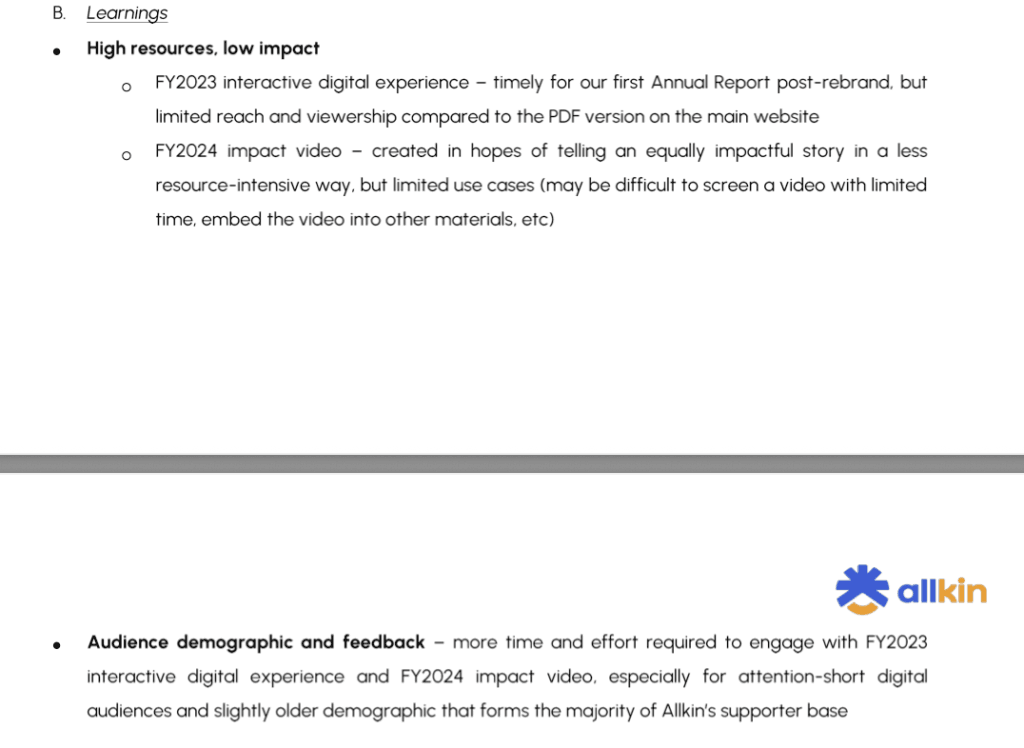
Microsites don’t get the most viewers, but viewership may not be what you’re engaging for
The 2023 digital experience on a microsite required great effort, but there was limited reach and viewership. Of course, one can say that reach and viewership aren’t the numbers that matter, but that it’s the profile of the reader that matters. For example, you really only need to get the decision-maker or the donor who can give, to read it.
And within the market, if you only reach 30 odd new funders, and one converts to give $20,000, then you’d be set. You get a lot of money.
You should be optimizing for the quality of engagement
But I suspect that they said it wasn’t good for viewership because of the time spent reading. If we’re completely honest, we won’t read Annual Reports in our free time. Most of us do it because of work. So when I started reading the 2023 Annual Report, yes, there were lots of bright colors and good designs. There were the impact metrics.
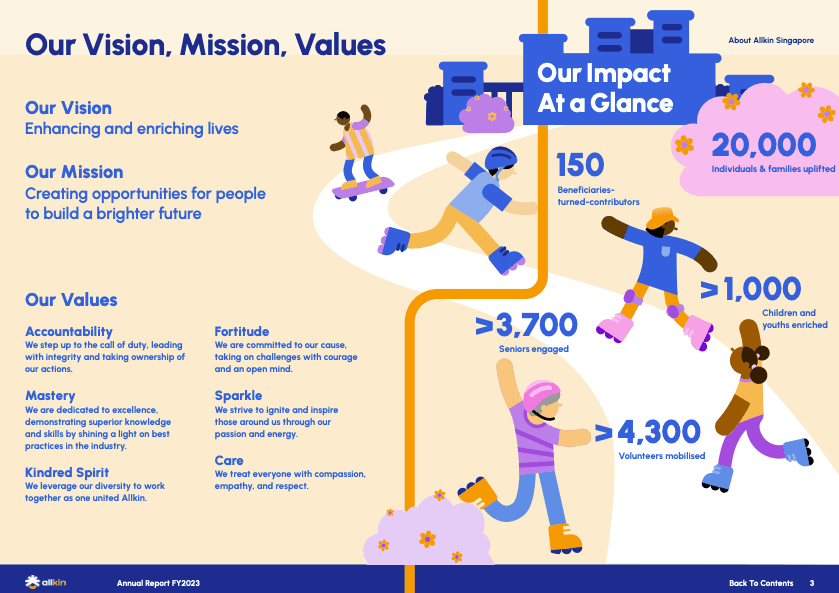
But the stories that would tug at one’s heartstrings, only came after 20 pages.
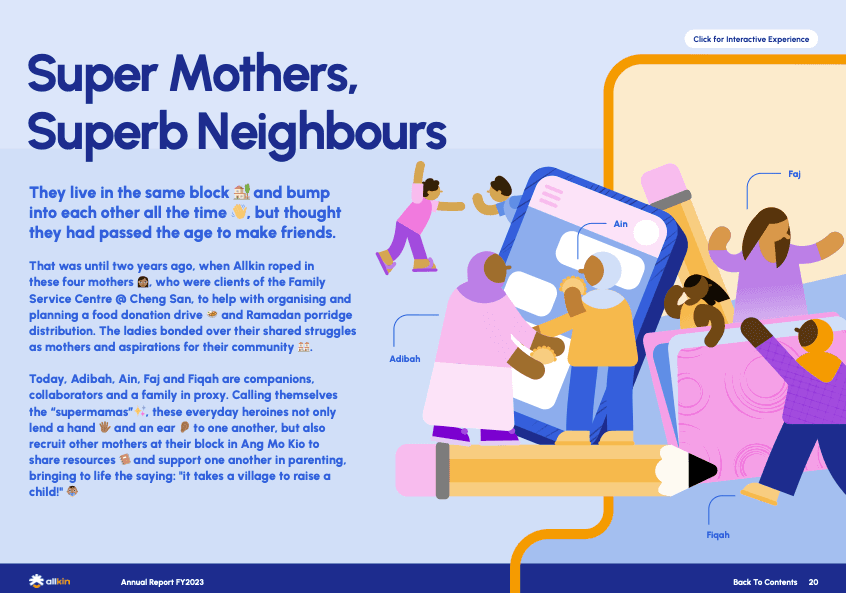
Which is why their earlier Annual Report, was probably much better for them.
Sample 1. Allkin 2022 Annual Report teaches us to organize around client stories
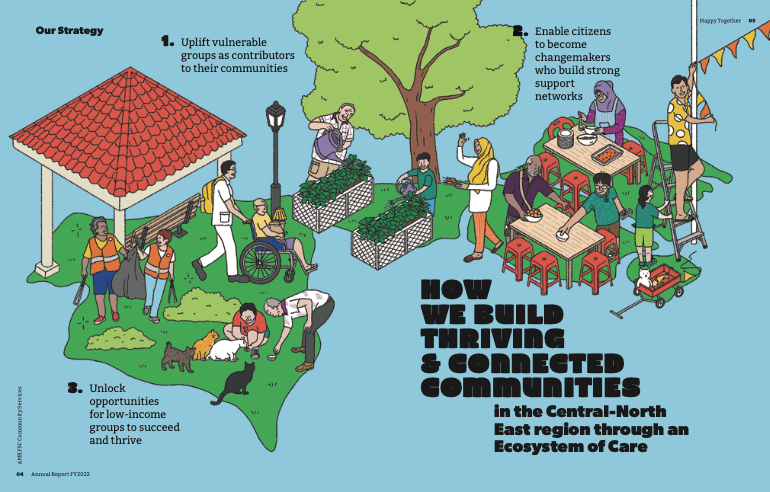
2022 was the year Allkin started on their strategic transformation to rebrand from AMKFSC to Allkin. For their 2022 Annual Report, they consequently built a narrative around this.
Just look at this beautiful illustration of their strategy, through a canvas of their community.
Then the story of Uncle Goh, gave readers a better idea of the impact Allkin made.
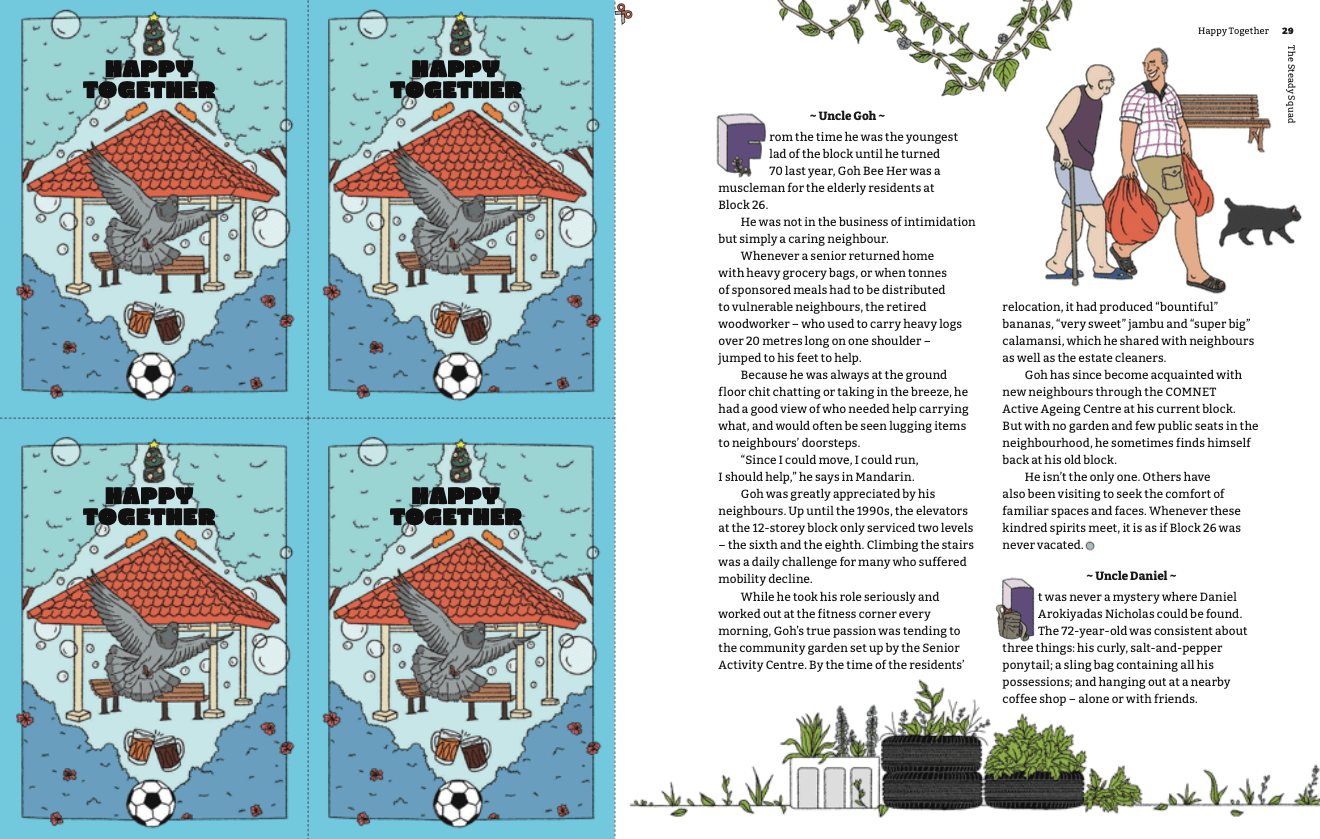
Just look at how they furthered the story here.
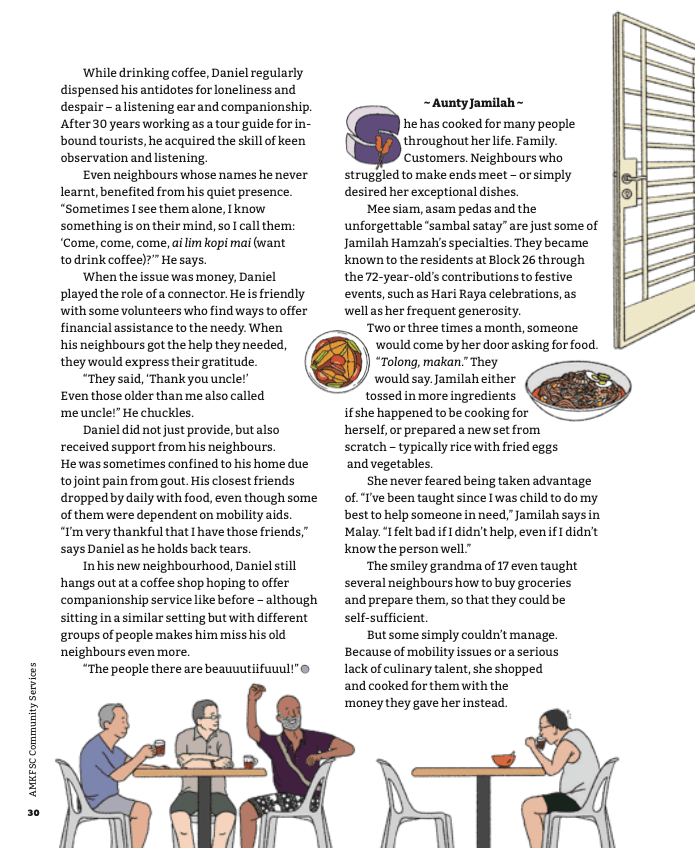
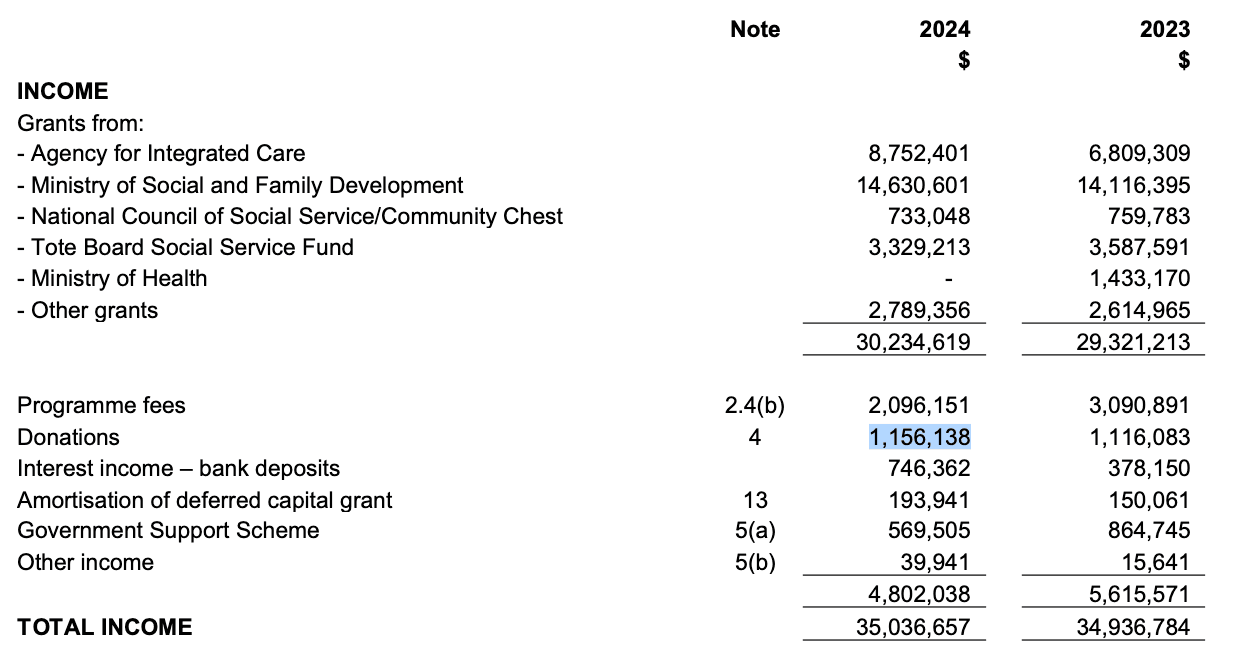
It just feels like a beautifully made story book that keeps you wanting to keep knowing more. Of course, having cut my teeth in writing biographies, I’ve a better preference for such. But you can clearly see that it has worked to a large part in prompting more giving, raising 40k more compared to the previous year.
Sample 2: Majurity Trust – learn to use video keynotes to engage
But of course, if you want a charity that has spurred giving, look no further than Majurity Trust. They have simply been the best at encouraging giving. In 2022, when I applied for a small $4000 grant to run a kitbag project, they were so kind to invite partners to the opening show of a circus act. A circus act!

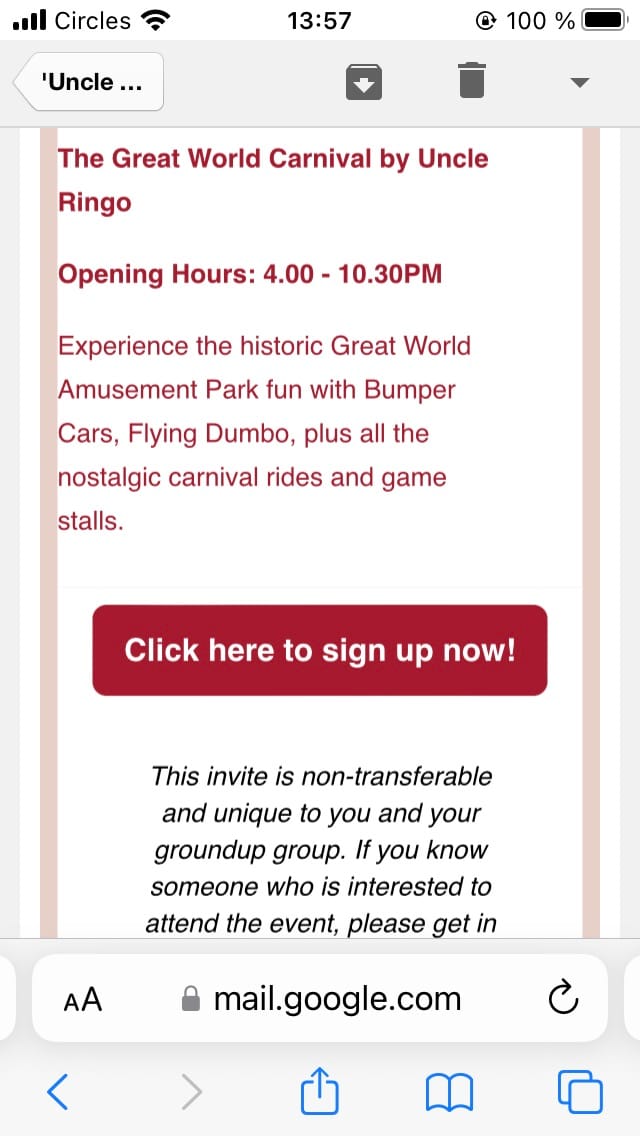
It goes to show how much they do to try and raise the profile of charitable work. This year, their Annual Report was no different. Presented in the form of a microsite, it was delightful to see the interactivity of the work.
Of course, there were semblances to Steve Jobs doing his keynotes, except that this time, it was Martin, the CEO.
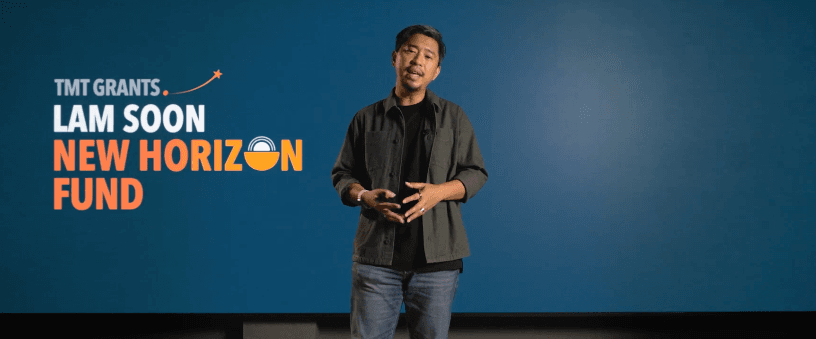
Majurity Trust has been the charity that has kept the spotlight over the charity sector, encouraging more and more to give to it.
But I also found it amazing that they were able to include the bite-sized ideas of what they achieved, and only added things that people could and would read, if they really wanted to. This is a highlight that I took away, for our own design agencies. Yes, you’ve done a lot. But you don’t have to talk about the whole damn thing. You just need to talk about the highlights, and if people want to know more, they will get down to it.
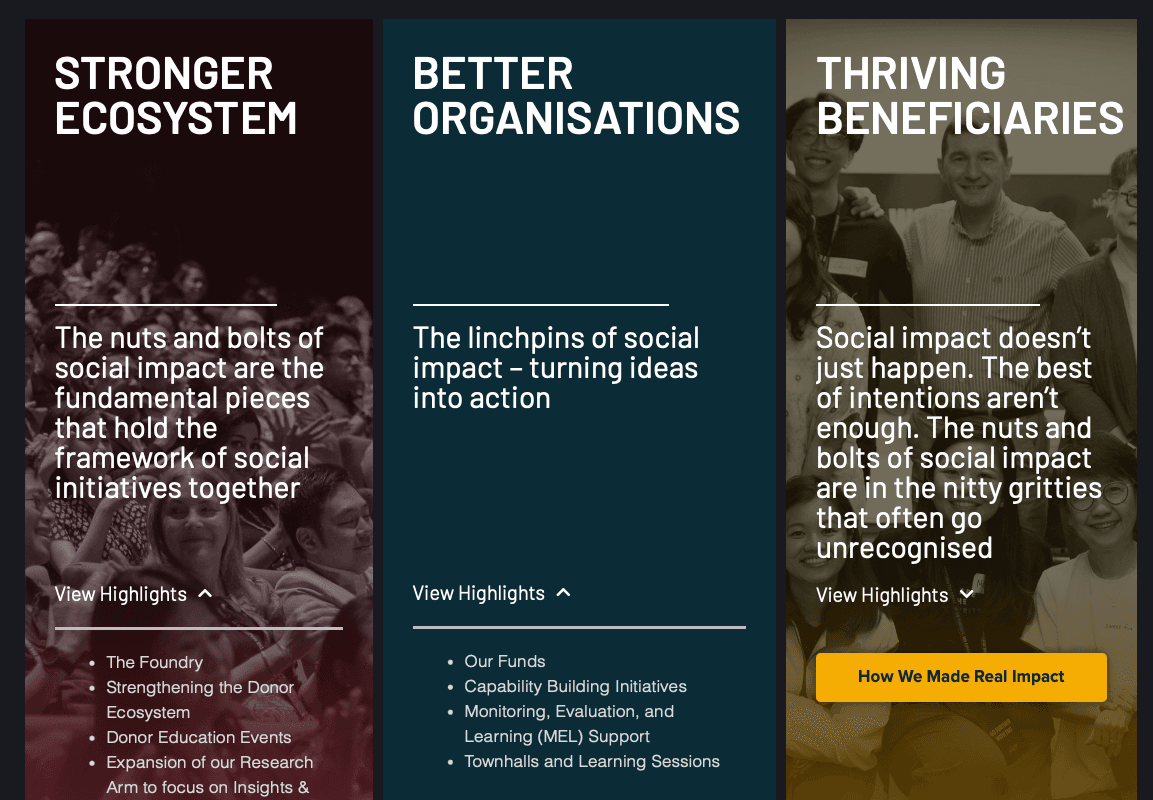
Find a message that resonates for the public, in terms of what they fear, and what they desire
At the end of the day, what is the charity’s purpose? It is to solve problems that no one else wants to solve. Hat-tip to Jason Wong, the founder of Father’s House (and previously Yellow Ribbon and Dads for Life), for pointing this out.
There will be areas that the government (all governments for that matter) will not do, can’t do, don’t want to do, or don’t dare to do.
These are the places where charities and ground-ups come in.
I can safely say that not many people enjoy reading Annual Reports because of how it’s often filled with stories of hope, that seem far-off and un-relatable. Not many people can relate to the low-income families that struggle with groceries, as they don’t have that personal experience. Nor can they relate to the elderly woman who lives in loneliness.
Move from what we do, to what the community cares about
As a design agency, over the years, we’ve been trying to shift our clients towards a more reader-centred approach, where we design an annual report that would help readers. Not help the agency.
Help readers.
This sounds strange. Why would you want to help readers? Aren’t charities the ones who need money, resources, and people? Yes, they do. But if you don’t have a story that resonates for readers, then you would never have more readers who want to read more, and more.
I hear you yelling,
Give me an example!
Well, from our reading, we’ve not found one. But the closest might possibly be Beyond Social Services. Just look at this.
Beyond doesn’t start the Report telling you what they needed. They just told you
hey, social issues are vital collective points where people can come together and rally, towards a common good.
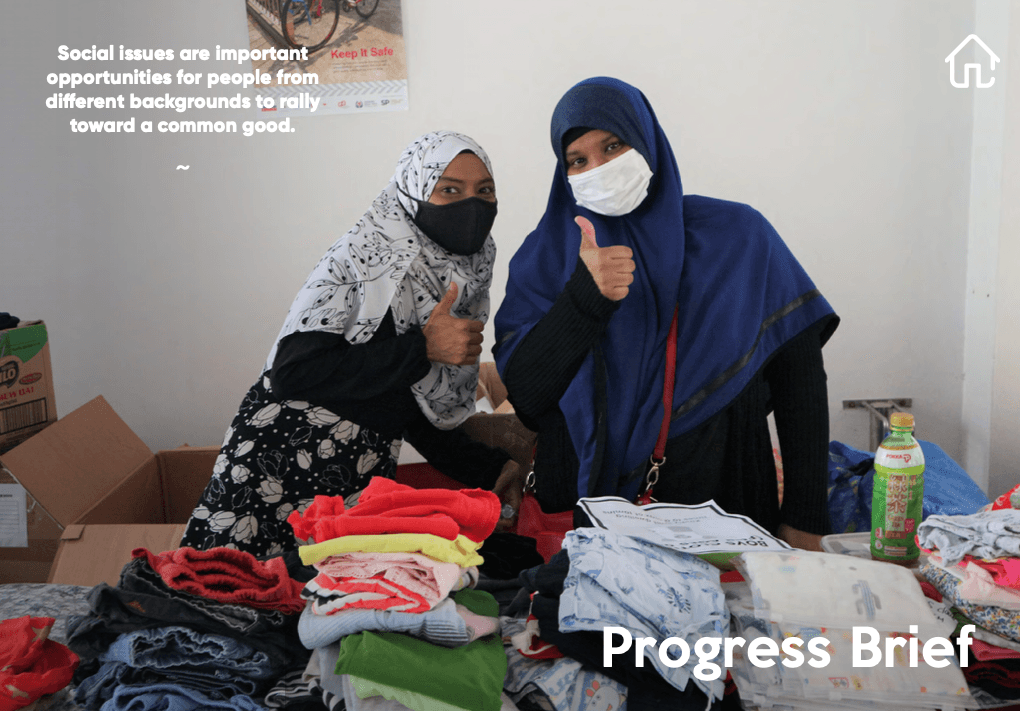
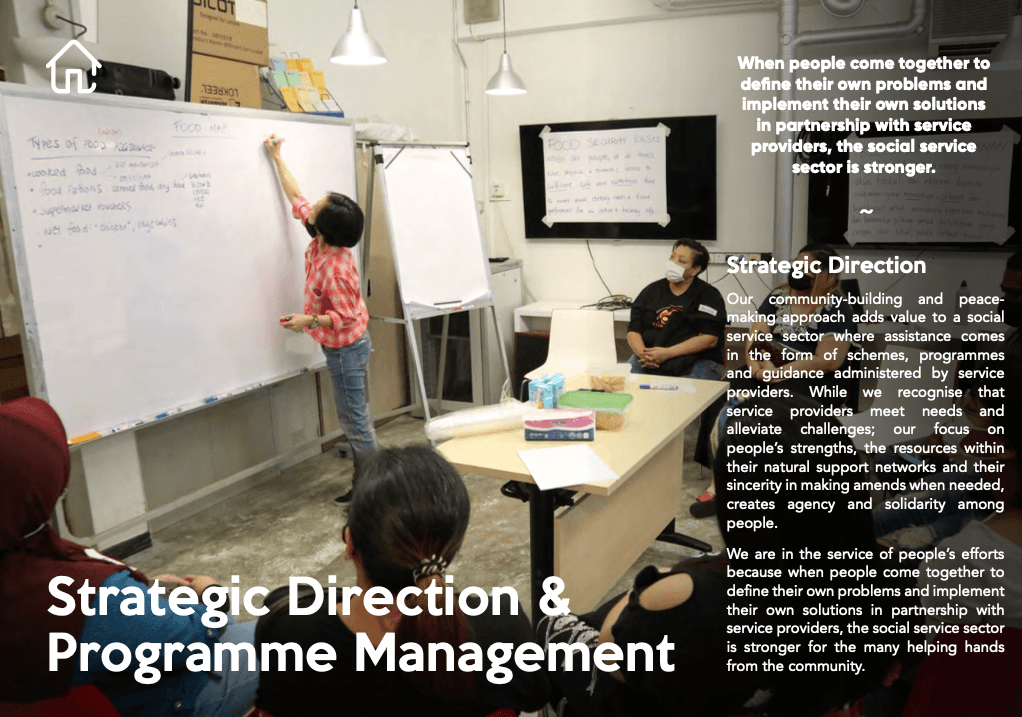
Beyond then go onto show problems that affect a large section of society, and not just a small bit. Just look for example at this Strategic Direction and Programme Management.
They share why they think the way they do, which is relevant for you. They tell you that communities are stronger when they solve things together, for themselves; not when the professional tries to solve things for them.
Because you’d quickly realise that you too have problems in your community.
- It might be your church cell group, where there are people who just come and do not pull their weight.
- It might be your friends, who simply don’t take the effort to organize things.
Whatever it is, Beyond tries to make it relevant.
For example, this year, for The Helping Hand, a halfway house, we’re not just planning to do a laundry list of things that we achieved, like the revenues of our removals business. Rather, we’re planning to coalesce it around things that matter to our donors and partners.
- A safer Singapore
- Stronger families, where we learn how to manage the drastic stress of parenting, working, and figuring everything out at the same time.
- Making difficult individual change.
These aren’t things that matter just to us, in the specific instance of drug rehabilitation, but to everyone.
Don’t give up the power of an annual report
Each time I receive an annual report, I’m always delighted to see the stories of what lies within. I’m simply blown away by the level of detail that goes in.
But no one seems to read them, and few appreciate the gems that can be found in them. That’s a real pity.
This year, if you’re tasked with the making of the annual report, don’t waste it. Do these three things.
- Make it relevant for the reader, not just for your organisation, because frankly, donors don’t just care about you. They care about themselves too.
- Don’t make it flat. Include shorter videos.
- Make it worthy of reading.