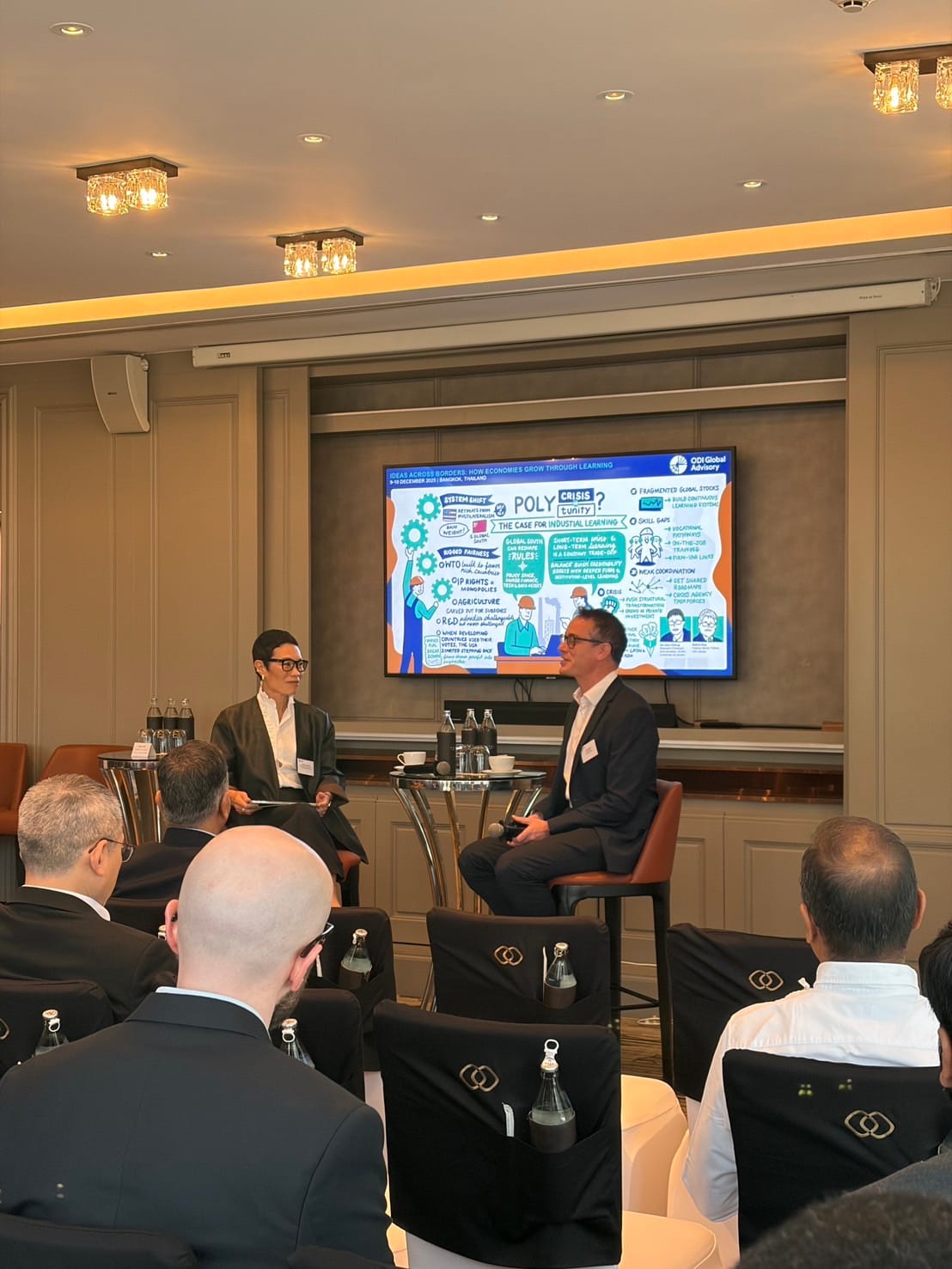
Before we begin, here’s a story.
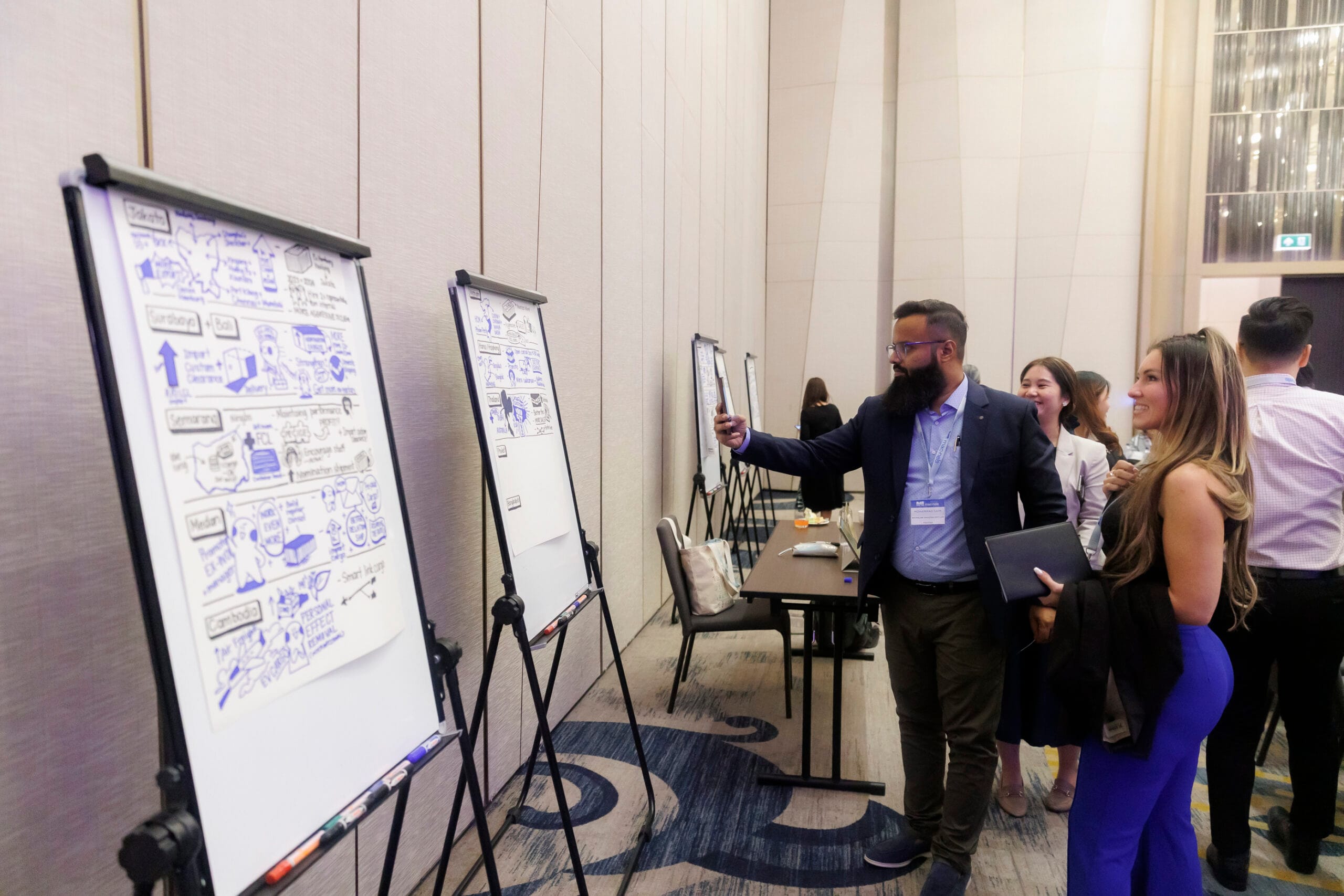
It was September 2024, in Bangkok. It was the Mac-Nels Conference, a global shipping firm. I stared at the crowd taking pictures of what our graphic recorder MM had drawn, and was amazed. Was it that good for so many people to crowd around it?
It was the first time I had seen the power of graphic recording for an audience, but I still struggled to see why. Yes, I was the salesman who’d sold the service, but even then, I wasn’t quite sure why it mattered.
The skeptic in me was thinking,
Yes, all these people would forget what was discussed.
All the pictures they had taken of the graphic summaries – they wouldn’t refer to it again.
Yet over and over again, we kept getting more enquiries for our services.
We realised what the challenge was. But before I go into that, I know – you need to get your 3 quotes. So let’s get that out of the way.
| Graphic recorders | Pros | Cons |
|---|---|---|
|
Media Lede (yes, that’s us) Contact |
1. Each engagement comes with a pair. An artist and a notetaker pairs up to ensure that no points are missed, with the notetaker capturing key points and the artist able to focus on visualizing, and not trying to listen and draw. 2. Prices start at $1500 for a virtual piece, and $1800 for a physical piece. | |
|
Art of Awakening Contact |
1. Established since 2011, they are one of the most experienced in the field, and even teach new graphic recorders. 2. I personally enjoy their art because I think they take the most important points, and visualize them, rather than all the points. | 1. They may be more expensive than average due to their experience and expertise. |
|
Artese Studios Contact |
1. They are one of the newer kids on the block, having been founded on June 2020 (same as us!), and thus can be more affordable. 2. They quote $200 to $2000 for works, but prefer that you contact them to discuss complexity of work. 3. I’ve seen them live, and think they can scope down main points into clear summaries. | |
|
Idea Ink Contact |
1. Experienced with commercial and financial companies like S&P, meaning they probably understand technical financial terms better 2. Can do wall art |
1. Because of their experience, be prepared for at least $3000 per live, physical piece of art. |
|
Sketch Post Contact |
1. Another experienced senior on the block | |
|
Welenia Studios Contact |
1. Established since 2012, and thus has about 14 years of real world experience. 2. Art tends to be more organized, and less of a sprawl. 3. Art does (and can) capture more text, to include more explanations |
Now that you’ve the TLDR (too long didn’t read) version, I’ll drill down into the challenges your conference attendees will face, and what you should look out for, if you’re considering a graphic recorder.
First let me lower your expectations
Before that, we need to say this.
- If your conference has been curated poorly, with a topic that few care about, having a graphic recorder will not help.
- If your speakers have few insightful things to share, having another graphic recorder also wouldn’t help.
- Graphic recording artworks are highly contextual. This means that people have listened, and use the art as a way to remember. It’s not that great at teaching people stuff they haven’t interacted with before. So just dumping it on your socials, and expecting your company to ‘blow up’, and get many likes and follows, often doesn’t work.
That said, let’s go.
Challenge 1: People don’t remember what was discussed, so you need to embed your meeting insights in their minds
Remember the last conference you were at? What did you take away from it? Nope, not just the weight from the food there, but the actual, insight that you could apply to your life. Not much?
Here’s why. There’s just too much material in conferences for anyone to meaningfully do something with it.
That’s why if you even manage to take 1 thing away, that’s already a big deal.
That’s why in conferences, we often focus on two types of talks:
- The ‘Big Idea’ talk – where you introduce a revolutionary change in perspective that makes someone go, “Oh, I never thought of it that way before.”
- An example? Think of Lawrence Wong’s most recent ministerial statement on tariffs. His big idea? Whilst countries become more isolated, Singapore will strive to become a trusted node and hub, so that more resources flows into it, and through it.
- The “How To” talk, which gives people practical tips.
Now, in choosing a graphic recorder, you must be certain what kind of talk you’re doing. Only then would the graphic recorder know how best to embed your ideas in the audience’s mind.
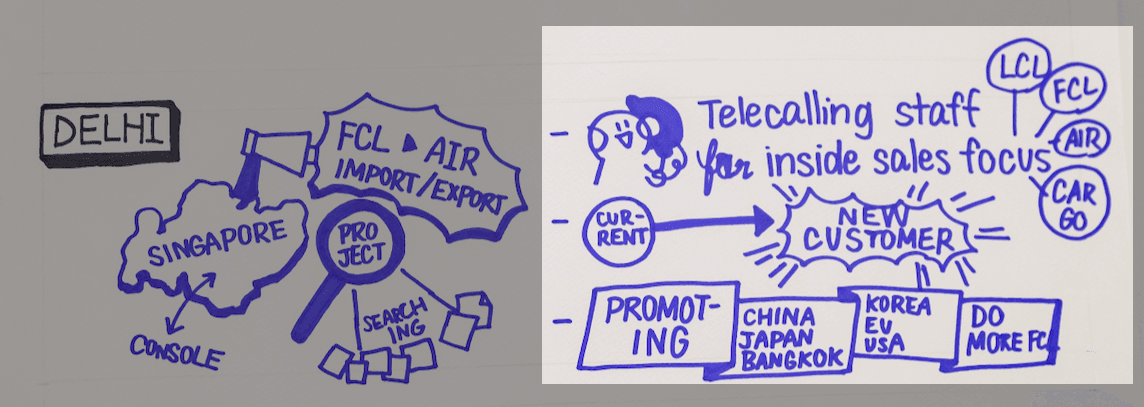
Here’s an example. In the Mac-Nels Conference, the organiser wanted staff to leave with practical tips. We focused on visualizing the sales methods that worked for staff such as “inside sales”.
Challenge 2: Words are abstract, but visuals are real
When you give presentations, you’re essentially selling your idea. Words can only go that far. You need more than that.
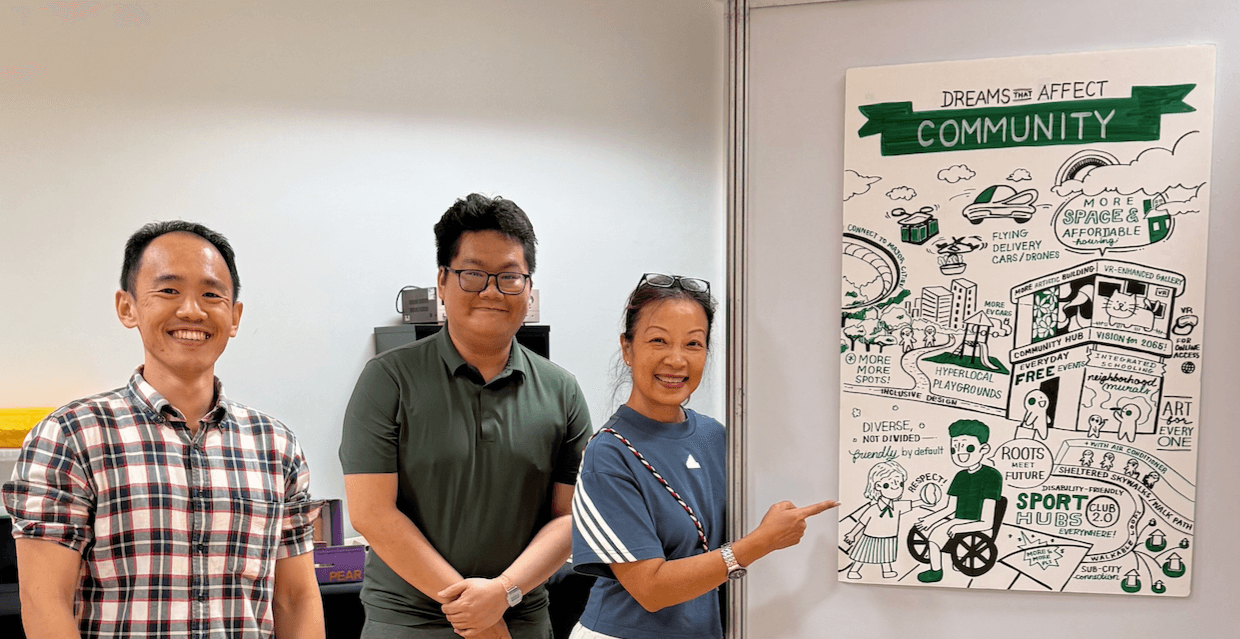
In May 2025, Clara, from Moulmein-Cairnhill’s Residents’ Network, told us of this great idea she had to envision what SG100 looked like. During the conversations we organized, there were many words. But it got better when we visualized it with visual facilitation, and helped everyone to coalesce around these pictures and go,
ah, that’s it. That’s the picture and vision for our community.
We want that.
Challenge 3: People aren’t always engaged in (boring) presentations, and live art is exciting
This is not the speakers’ fault, but many presentations can be boring because of how many speakers aren’t trained to share in an engaging way, through stories, and points.
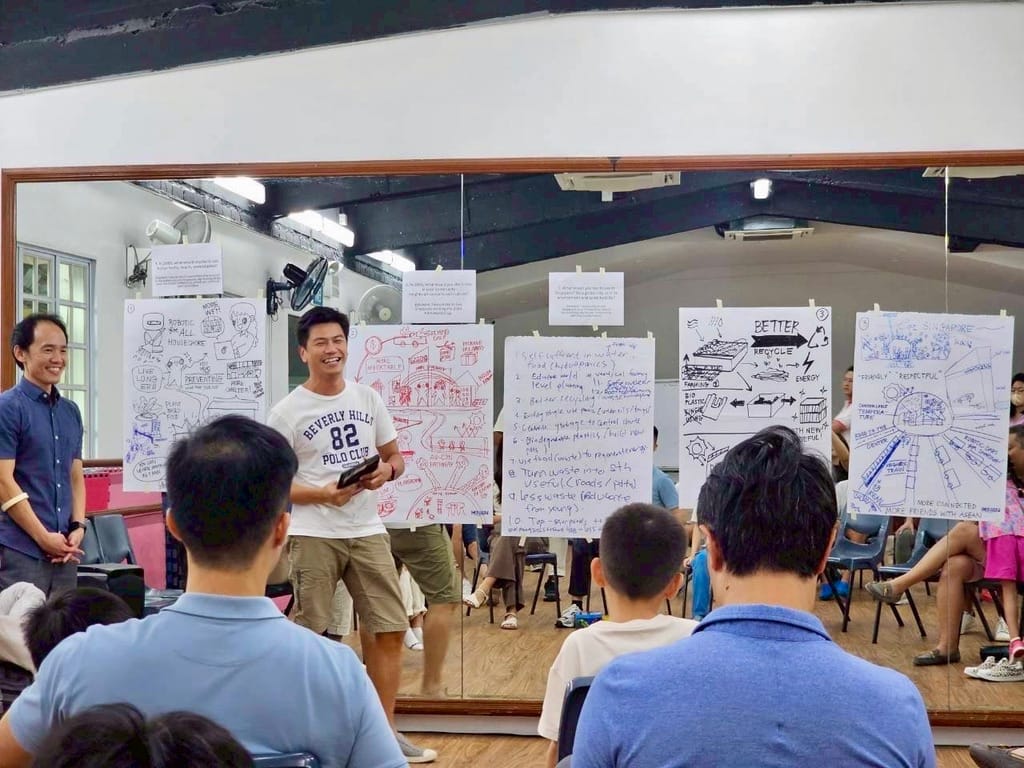
Participants zone out and check emails. Live art, as shown below, can really help to grow the engagement with the work, and help you to get the engagement you need.
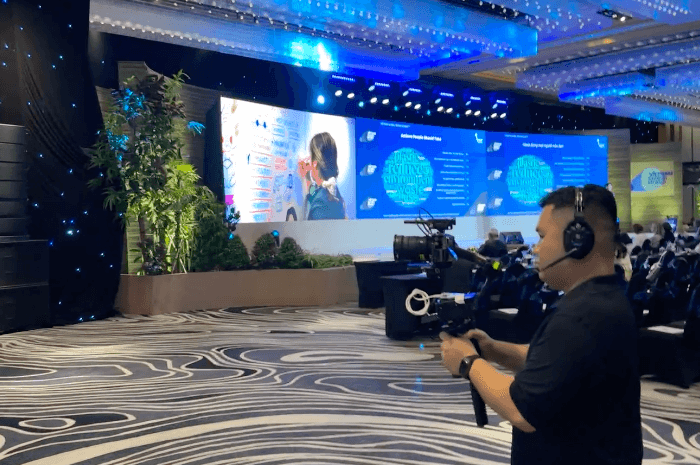
Challenge 4: The $1600 budget you spend is for a graphic that’s thrown away?
But after the engagement, what happens? Do you just throw it away? Doesn’t that seem like a waste of money?
Well, not always. If you do it well, you can turn it into a Reusable Learning Object. But you’ve to be careful. Because the visuals are so contextual, they need to be explained. Just dumping them onto your website, or posting it on your socials, without properly giving takeaways, may not work.
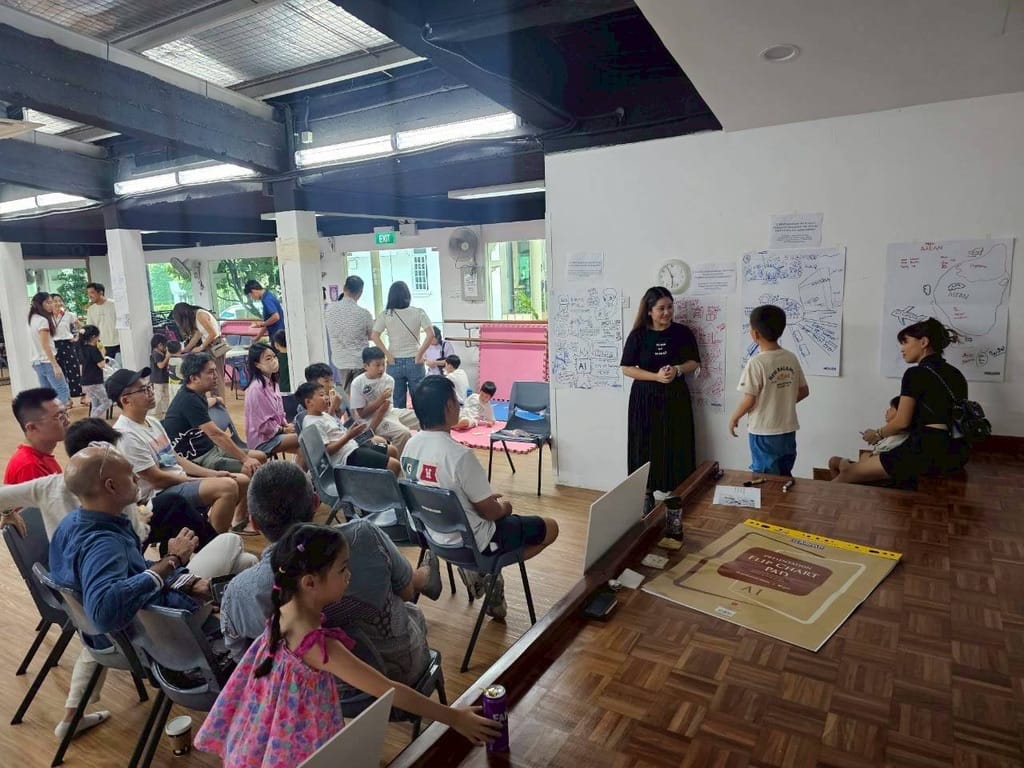
For example, with this community club’s work, we later put it together in an exhibition that people could go home with.
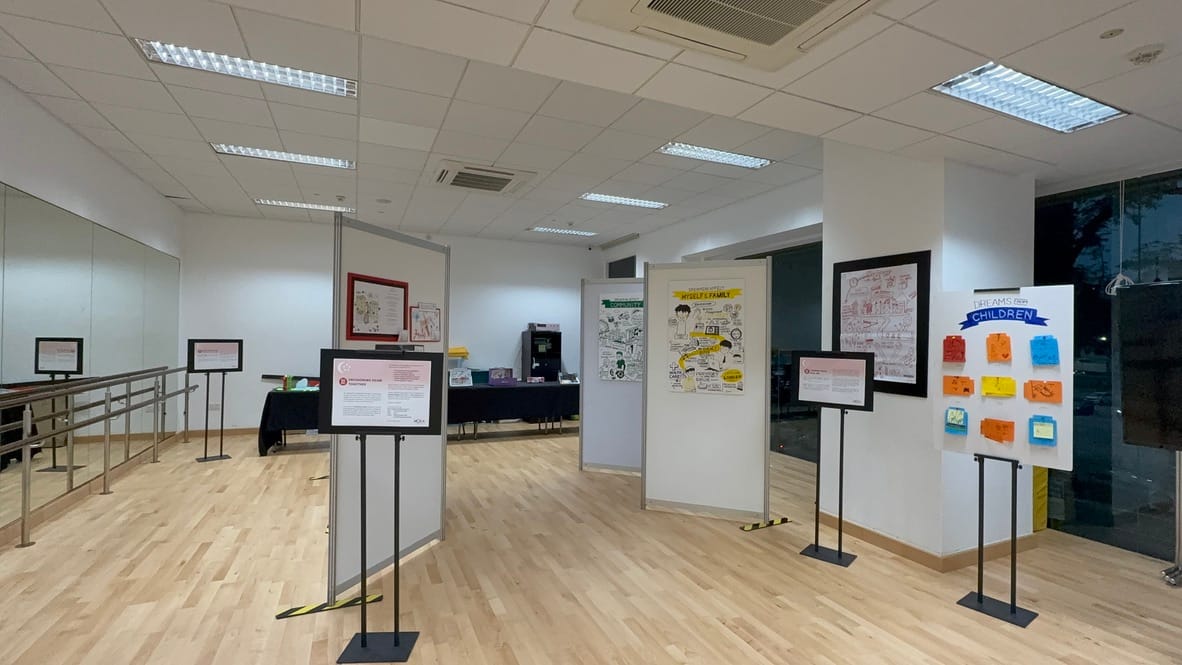
Now’s the time we can review the studios.
Media Lede – create great meetings, together with visuals that embed the effects of people meeting together
Well, Media Lede is our company.
We’re positioned a little differently to most because our team comprises of both designers, and facilitators.
For us, we’ve really thought alot about how best to design so that people’s ideas layer onto each other, and solve big problems.
Facilitation gives us the master skill of planning events where participants are engaged and listening, and not just hearing because they are there.
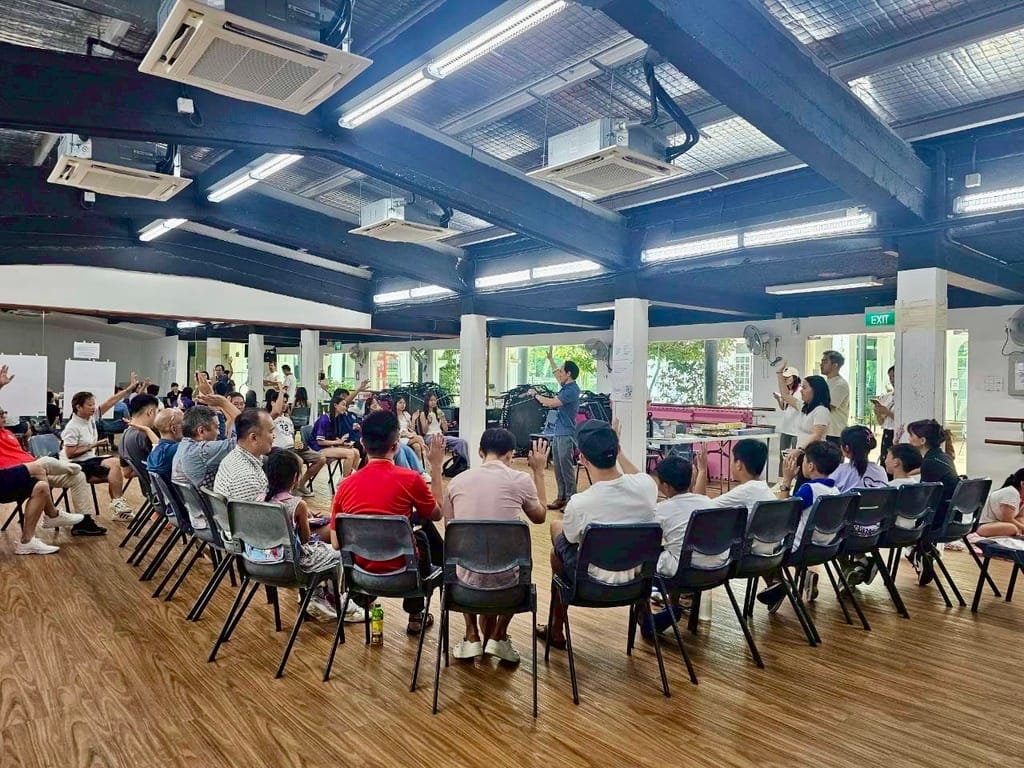
With clients, we often ask them how they are planning their events and offer some insight about how it can run for maximum effectiveness. For example, in January 2026, we had a big client in BMW.
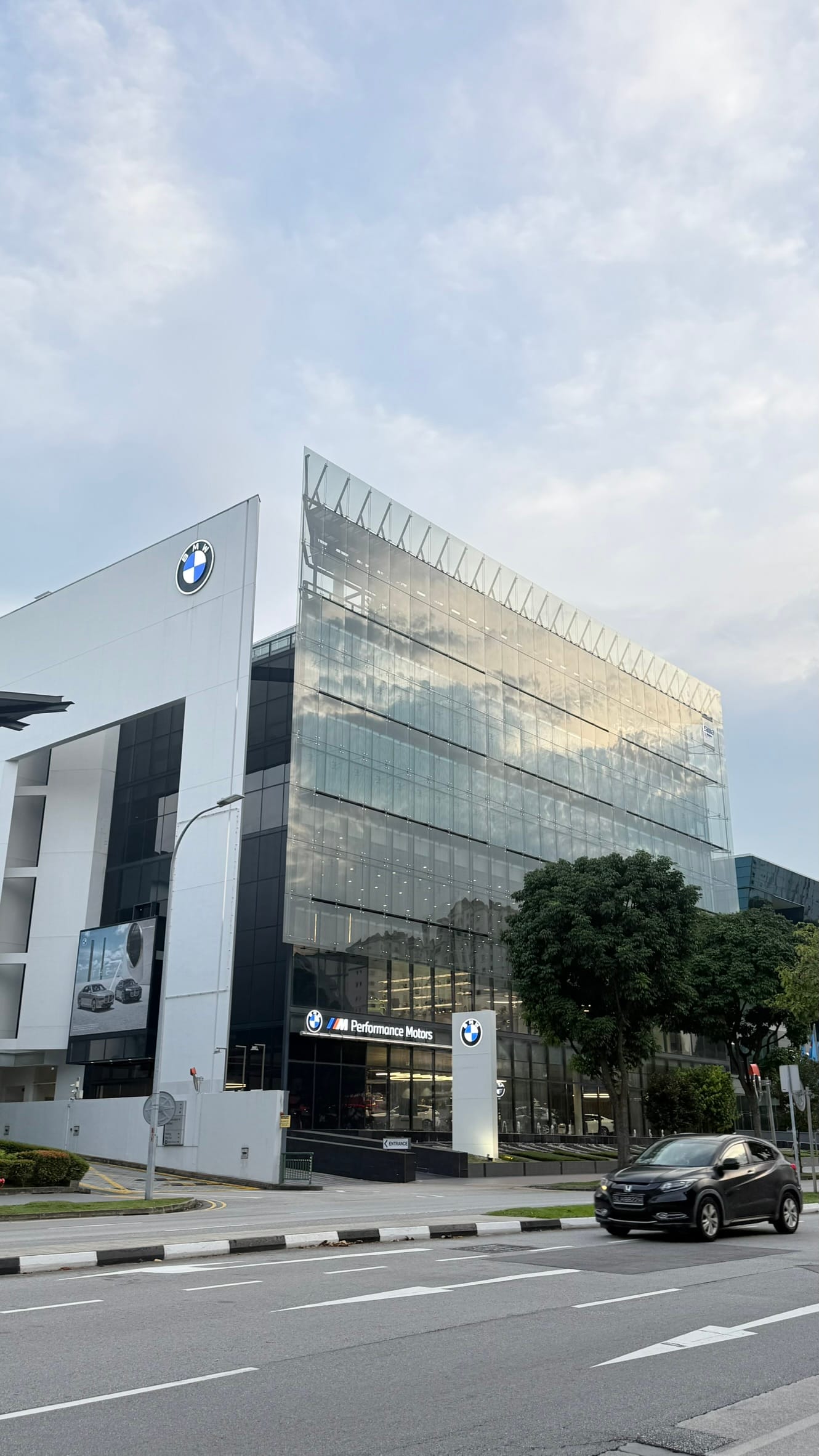
BMW was having a strategic retreat, and we visualized their discussions, so that they could have a shared picture where their colleagues went,
Yes that’s it!
You could see the excitement in the room when that happened.
We then advised BMW on how best to use the visual effectively. It wasn’t just about plonking it online in shared channels, but providing a good summary on what had transpired, and how they could move things forward.
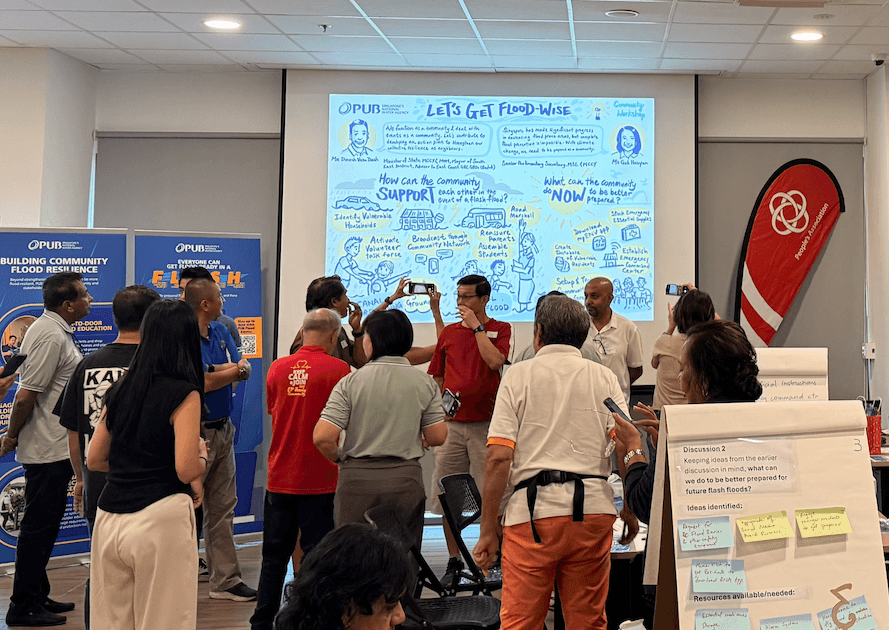
In another Public Utilities Board event below on flash flooding, we offered some pointers on how the graphic could best support the memory of the clients.
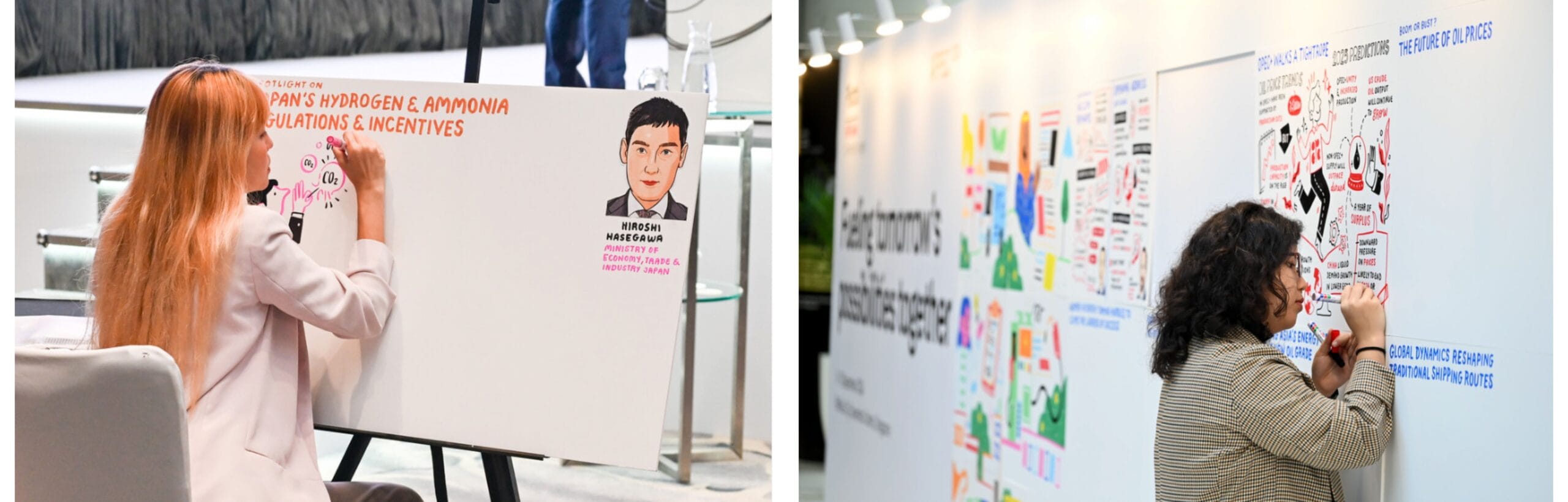
IdeaInk – for the big, ‘wow’ 11m long boards, and also the long experience
Even as we speak about institutional memory, and ensuring that participants take away useful things, we’ve realised that many a time, we can’t do things as big as Idea Ink.
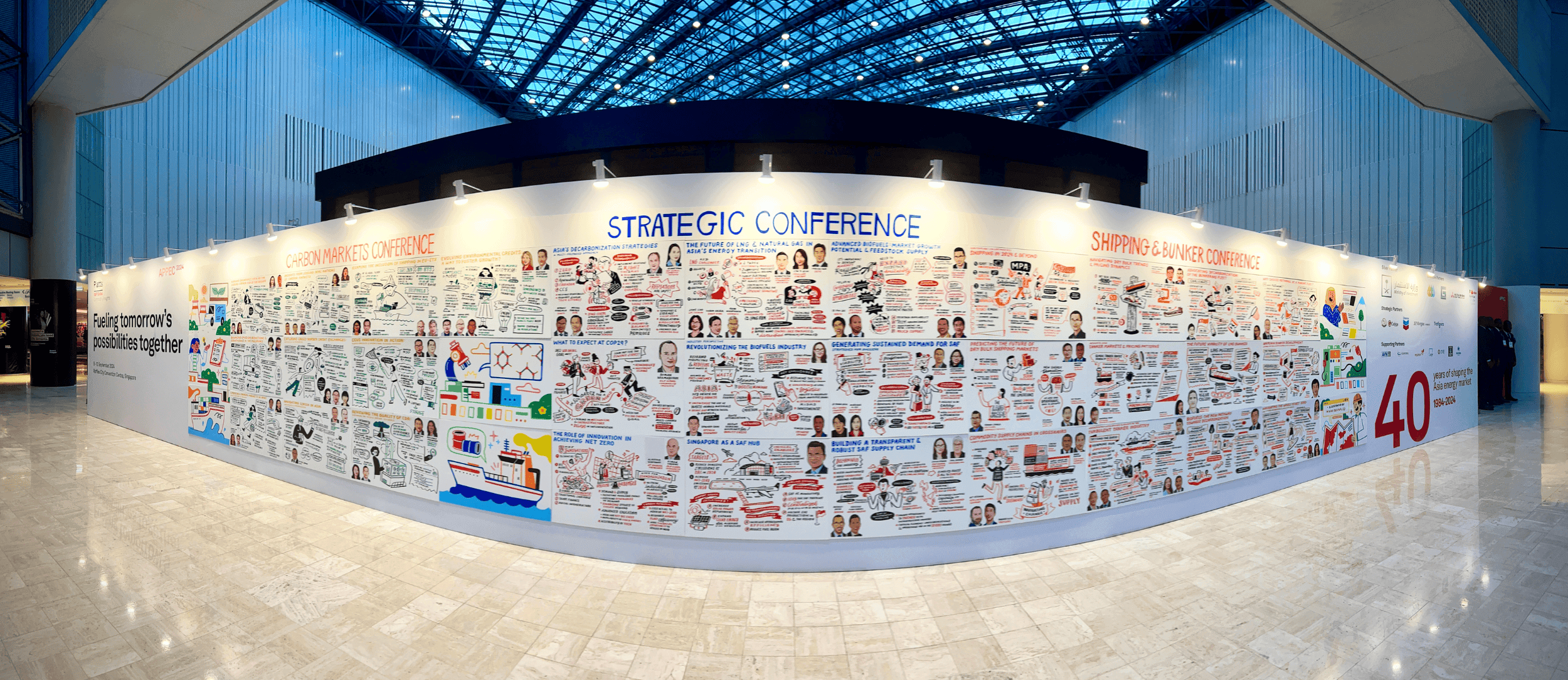
What’s also more important is that they are trying to disrupt the whole industry, by introducing AI powered infographics.
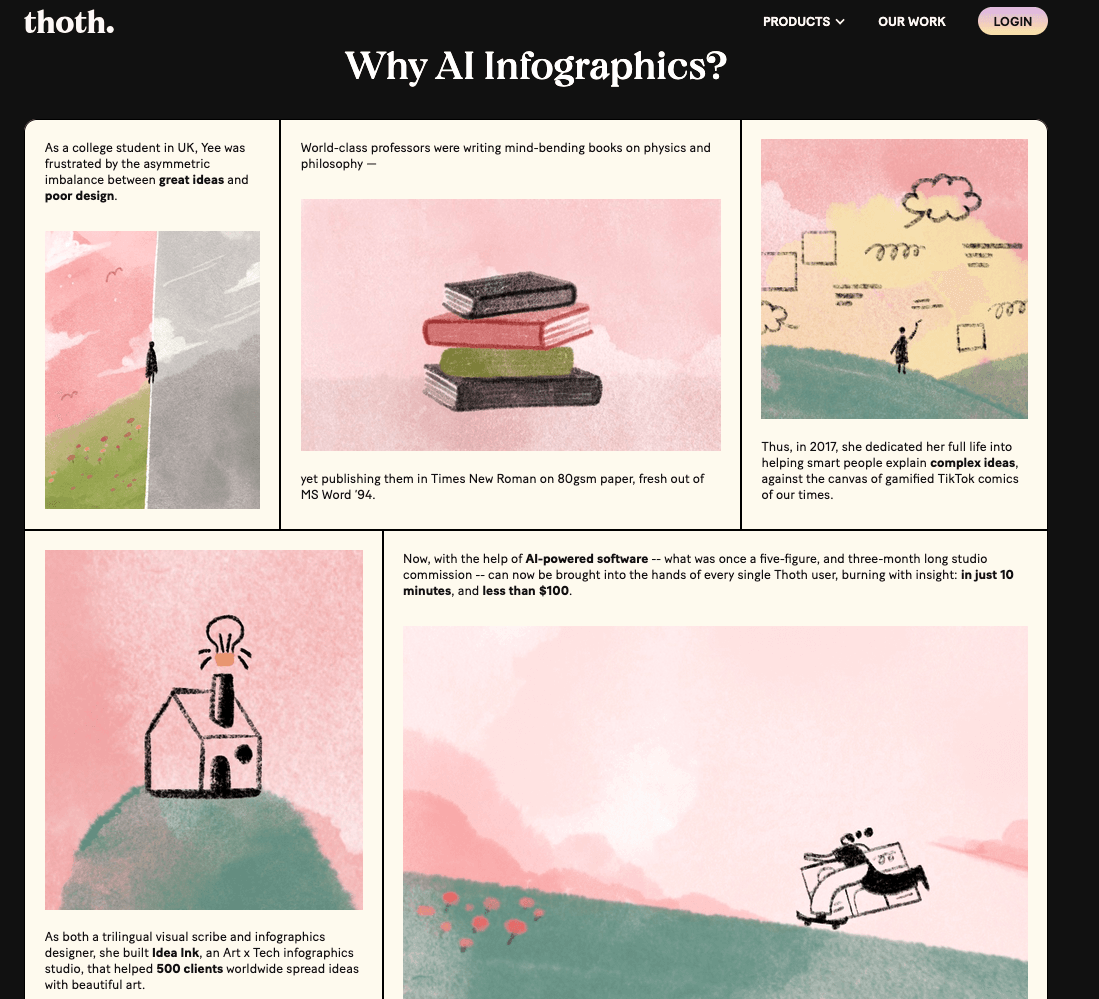
Chia Yee Hui, also the CEO of Idea Ink, has done it with her AI tool, called Thoth.AI. I looked at the outputs, and it looked oddly similar to an AI summary tool like Gemini.
Its algorithm may be something like:
- Take the summary.
- Every 2 panels, add a picture.
- TADA! Magic.
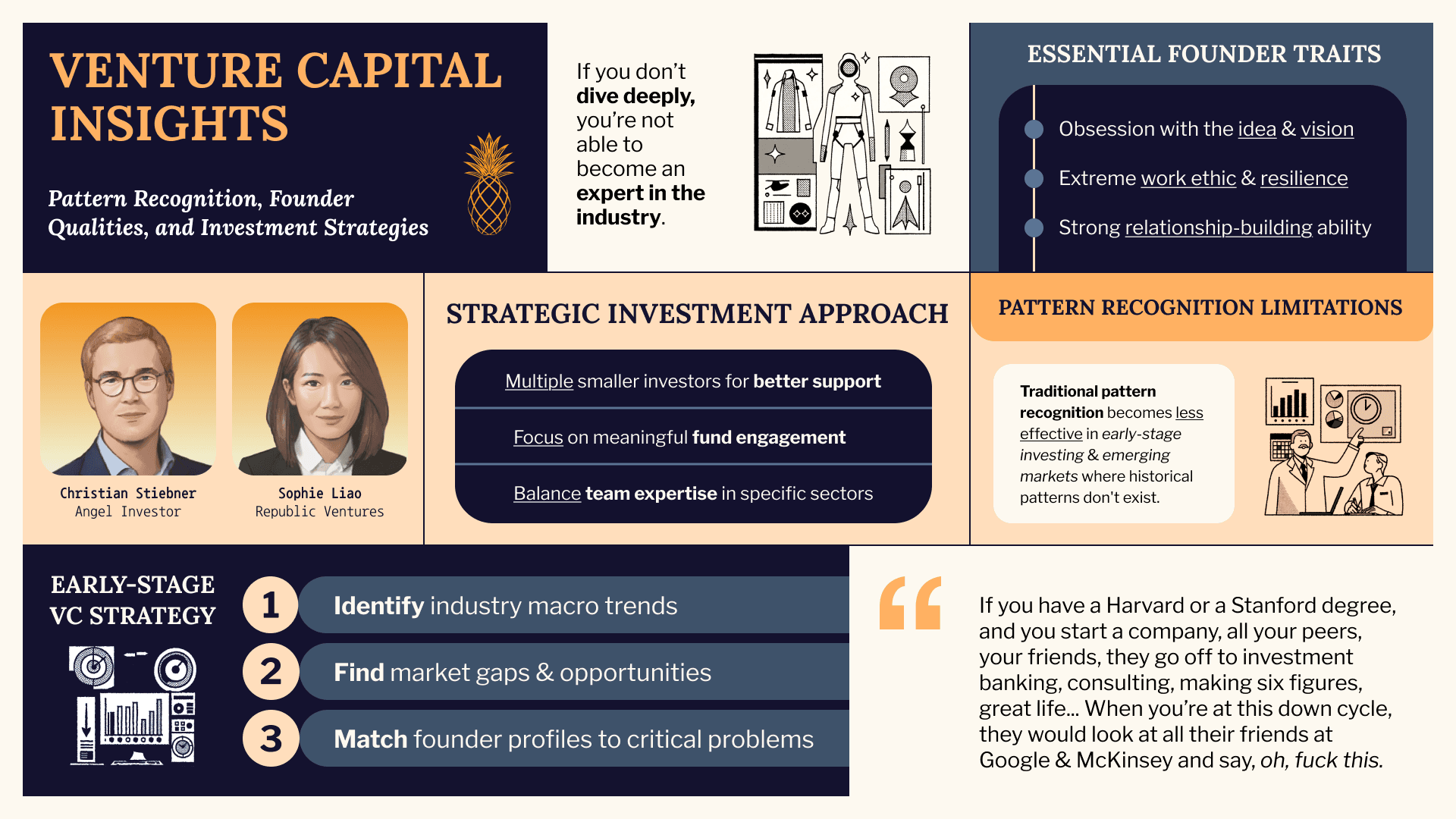
Is it really?
I don’t think so.
Artese Studios – value for money,
Let’s look at something else that still keeps to the large idea of graphic recording.
- Listening live,
- Summarising it,
- And drawing connections between the pieces.
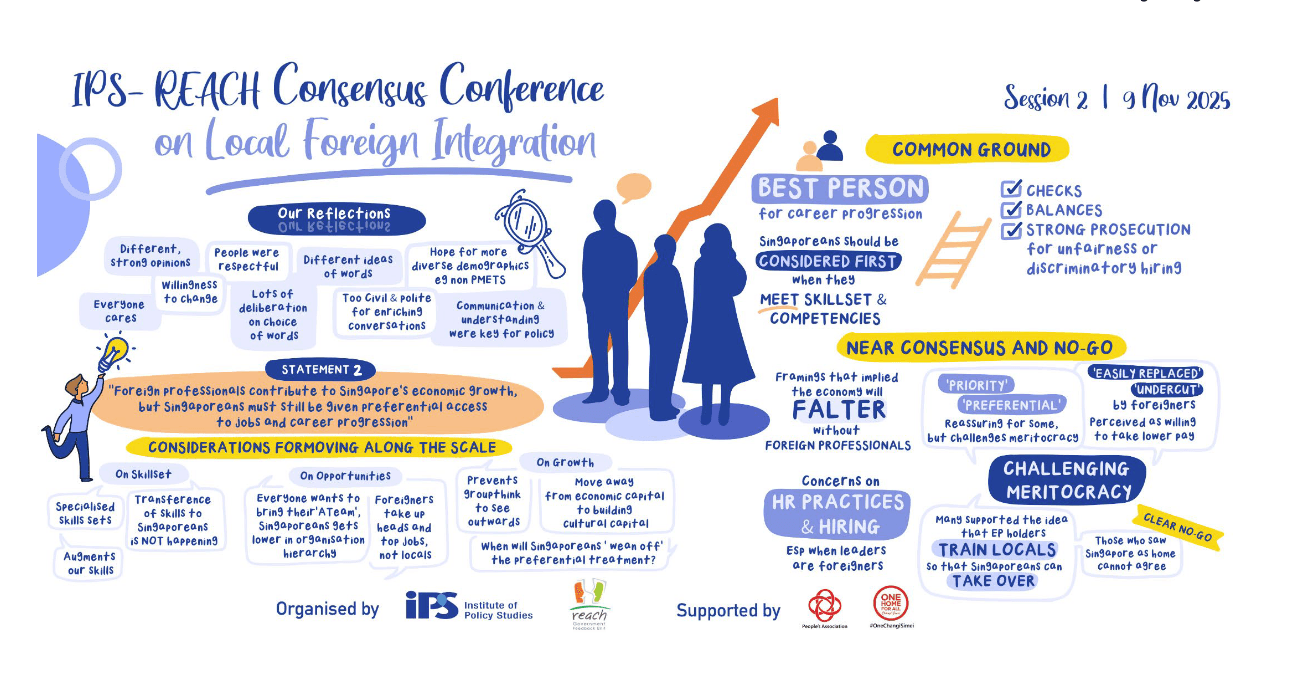
I first saw June Yeo do this whilst I was the participant at the IPS-REACH Consensus Conference.
If you look at what she’s done below, she has clearly mapped out what’s important, and then taken out the key agreements within the crowd, so that others can gravitate to those.
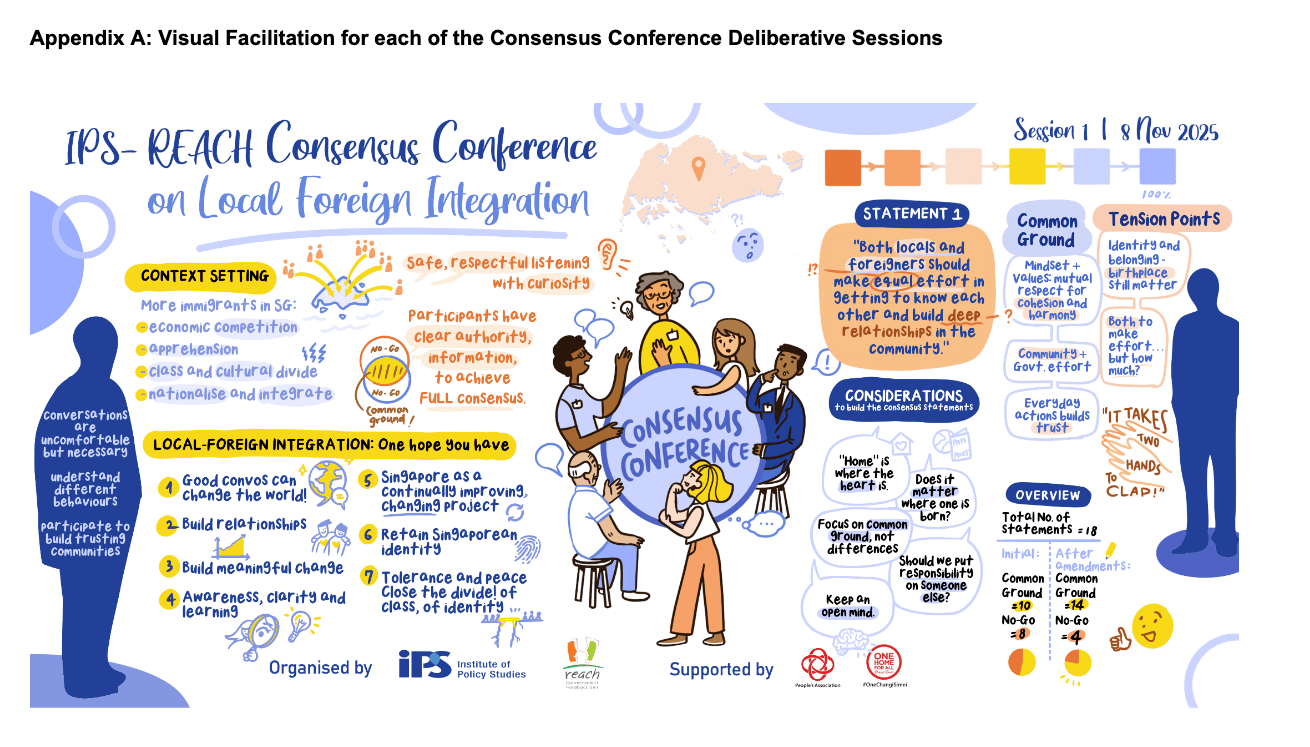
Her style, as you can see, tends to have a lot more white space.
Let’s compare that drawing style to someone with a different style.
Welenia Studios – senior in the field since 2012, with the ability to include more words in pictures
Wendy Wong, or the founder of Welenia Studios, has a style that might suit clients that want more captured. We’ve met clients that prefer to have more text explanations in the body of the visuals.
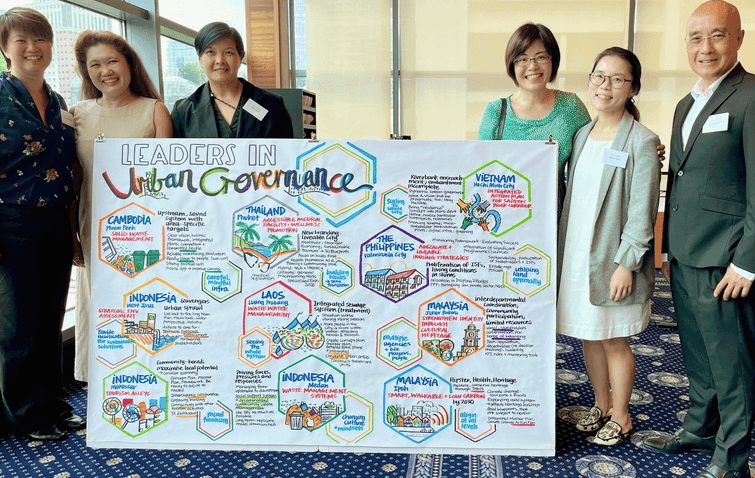
There’s no good or bad to this. It depends on what you enjoy more.
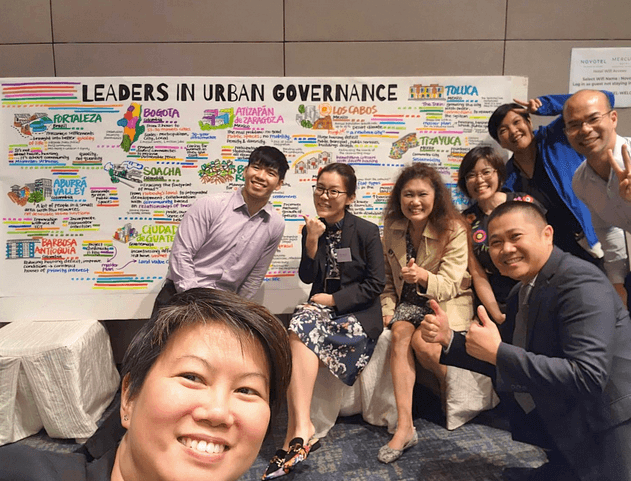
Find one that fits you best
Over the years with graphic recording, we’ve realised, this isn’t just about another fancy Artpiece.
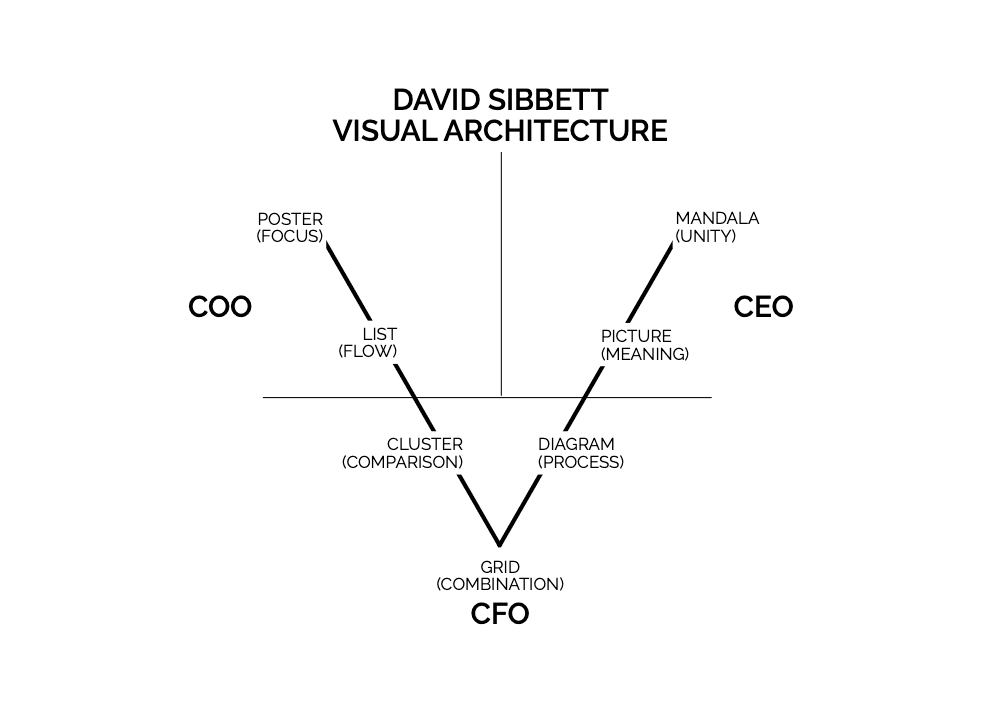
It’s about finding the ability to meld together the different points people make, and visualise it for them, so that better solutions can come through. Just as David Sibbett does here in his Group Graphics Keyboard.
For us, it’s also about building the shared pictures where colleagues and communities can say,
Yes! That was what was in our heads.
Let’s work towards that.
All of this will be more important in a complex time like this.