
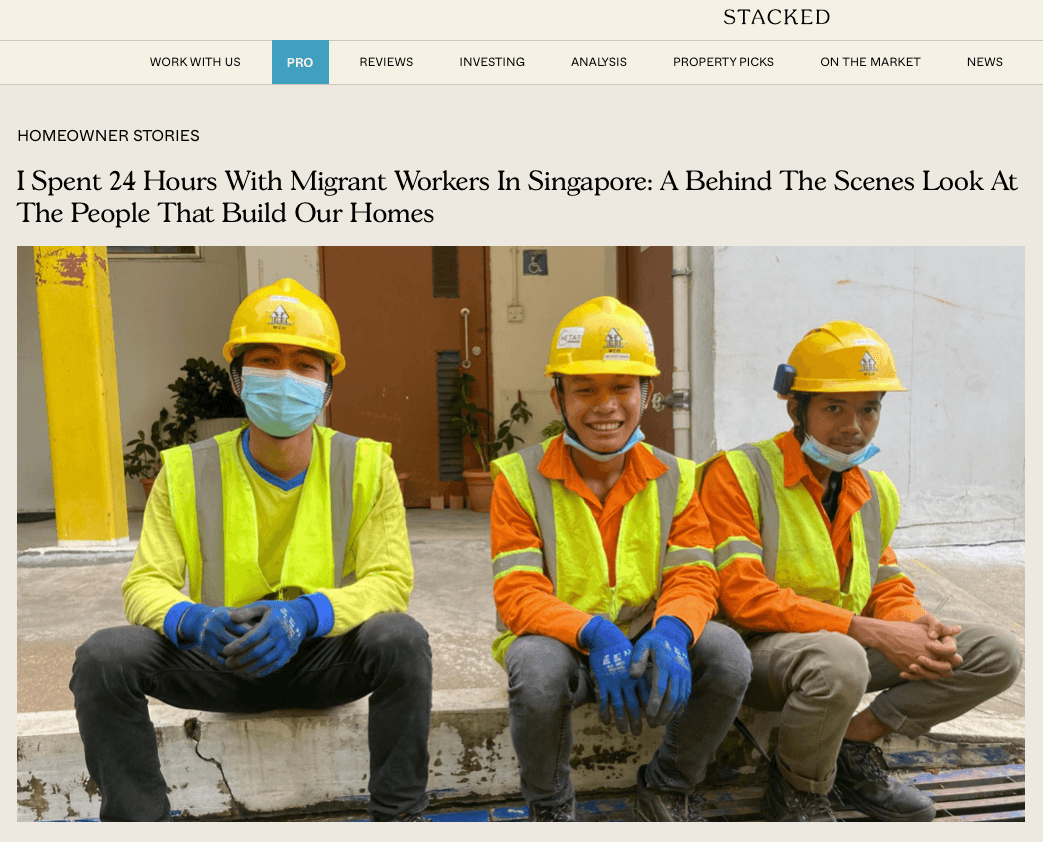
I was in the shower, stark naked, and I pushed the button to release the water. Just then a ‘No, no’ interrupted me. The worker, pointed at me, and then pointed at his other colleagues in the shower, who were showering with their underwear on, and then waved his hand.

Oops. I wasn’t supposed to fully strip in this dormitory’s showers.
What was I doing here? Well, one could say I found my own troubles, pitching my editor the idea of living in a dormitory, to help the public better empathize with our workers, so that they would complain less about their slow BTOs and even slower renovation.
But it was also a desire to beat the AI slop overtaking our world. I wanted to use a more ethnographic, lived experience of the world, and touch audiences with stark images of what one would smell, taste, do in those instances, and hopefully translate that into attention for the client, and subsequently sales.
It was hard work. But was it worth it? As a ghostwriter, that article paid me all of $300 for following dormitory workers for 24 hours, waking at 5am, carrying their poles under the hot sun, and trying to help people to better understand what it felt like. It just didn’t seem worth it.
But what was the market even paying for this? Was it just me, working for less money because the commercial companies could squeeze me? I started studying the successful bids for public tenders, the only source of transparent, market information about fees.
From GeBiz, I started to see what agencies were paying for. It seemed like an almighty amount of money from public agencies.
Please don’t get me wrong. I’m not saying that public agencies are overpaying. In fact, they are paying right – for the amount of effort that goes into each piece, and more importantly, the amount of ROI they would get back.
Let’s study what buyers paid, and how we can maximize the value of each content piece.
Stacked Homes paying for thought leadership
I did 2 articles for Stacked, and each article cost $300. They were amongst the highest paymasters already.
Amongst all the content focused sites, Stacked Homes has been one of the only few that has continued growing its audience. Just see below.
In a competitive market, decimated with Google’s AI Overviews, Stacked has instead accelerated its growth.
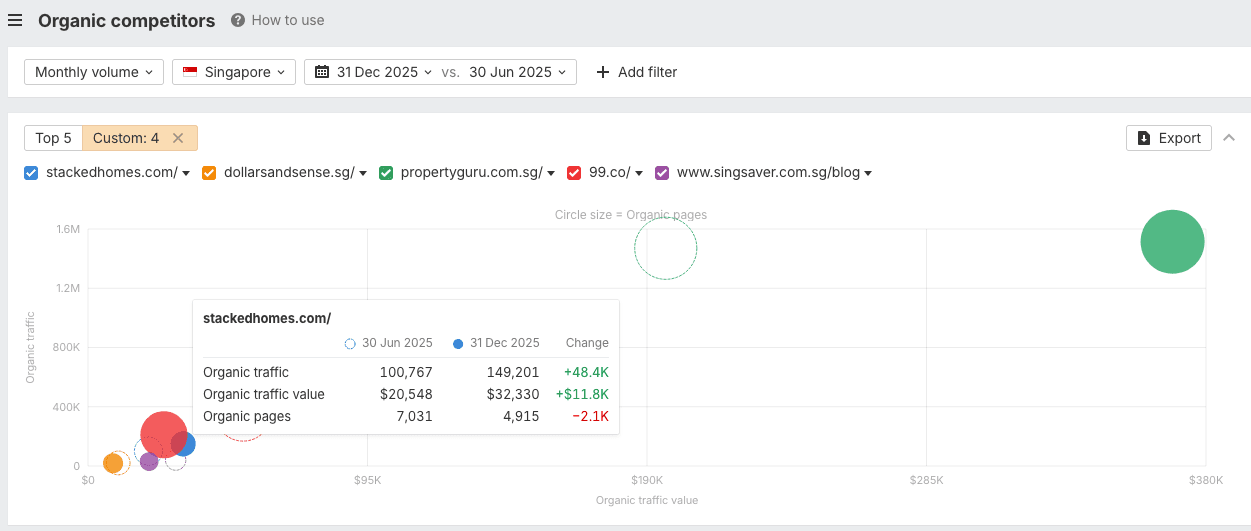
Its strategy was simple. Build good content, and sell them what they need.
The StackedHomes business model was simple. It would have enough property buyers and sellers who browsed its site, before Stacked would introduce agents, and take a cut off the fee.
It is a long game, but one that Stacked has probably been the most adept at building. One thing to learn is the type of content they are doing to grow their audiences.
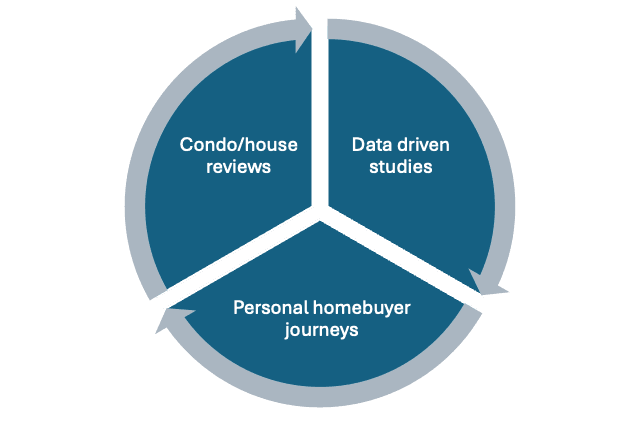
Firstly, look at how they are increasingly re-positioning data studies, so that the public can continue finding value.
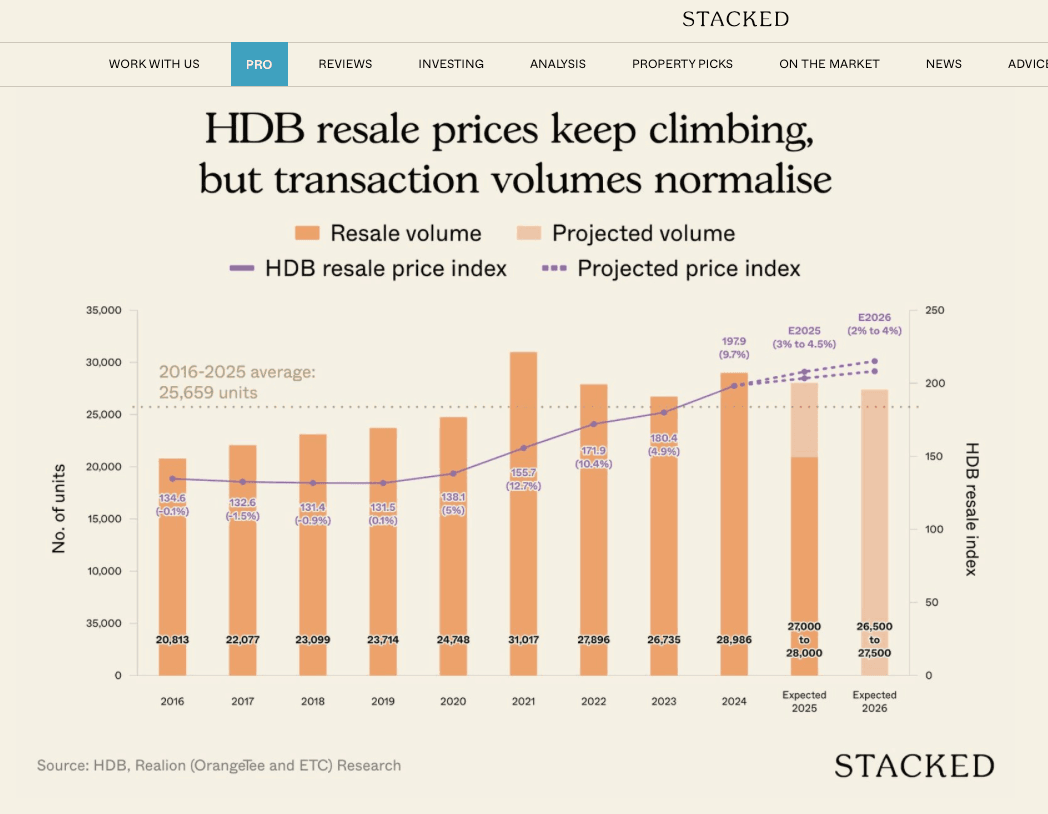
But what I find even more amazing is how they have kept up that high bar to content. Every piece they make is ‘remarkable’. It’s memorable. It’s not something where people will scroll past. People would instead pause, look, and think: I’ve got to bookmark this for later.
When people eventually think: I’ve got to buy a house, they would go to someone they trust. Where else, but the content that has been consistent? Sure, the agents might approach you, hope you come to them, but few would trust a new agent that easily.
What they would trust is the person who’s consistently showing up with these property insights. They’d trust Stacked, and Stacked would inevitably gain more money through the work.
ASTAR paying for reputational care, such as through its Impact Narratives, awarded to Nutgraf on 15 Sep 2025
| Task | Cost | Remarks |
|---|---|---|
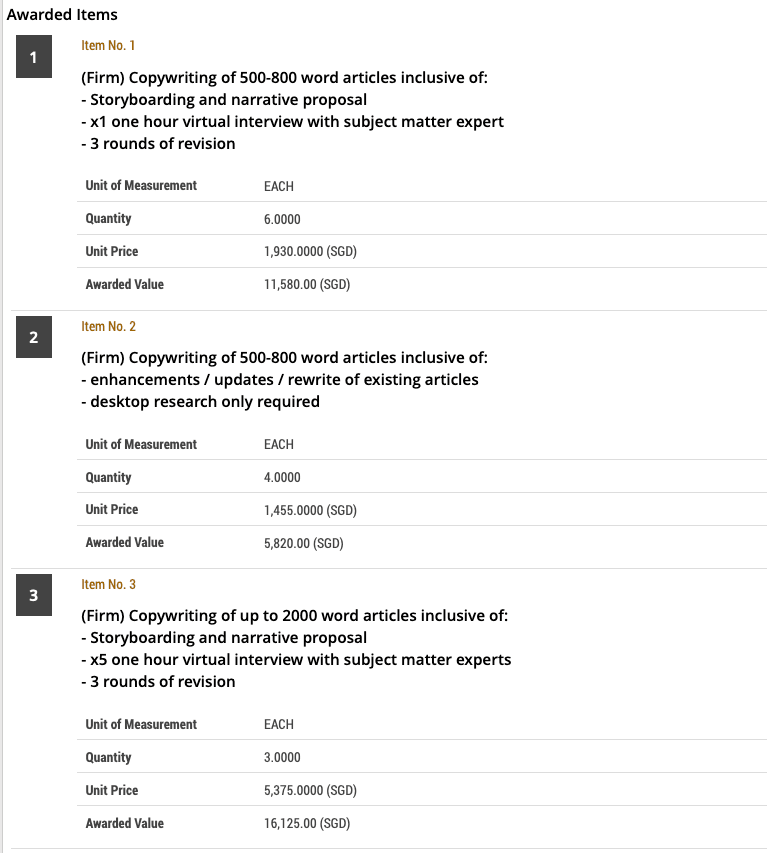
| 500 to 800 word articles with storyboarding , 1 hour interviewing, and 3 rounds of revision | $1590 | |
| 500 to 800 word articles consisting of enhancements and rewrites of existing articles, with desktop research only | $1455 | |
| Up to 2000 word articles inclusive of storyboarding and narrative proposal, 5x 1-hour interviews, 3 rounds of revision | $5375 |
We all know that Nutgraf is the premier content agency in the market, and I was surprised at just how much ASTAR was willing to pay for such impact narratives.
ASTAR is paying for reputational care. With the 3 founding journalists at the helm of Nutgraf, ASTAR knows their brand is in firm hands. There are no worries around whether their brand would be compromised.
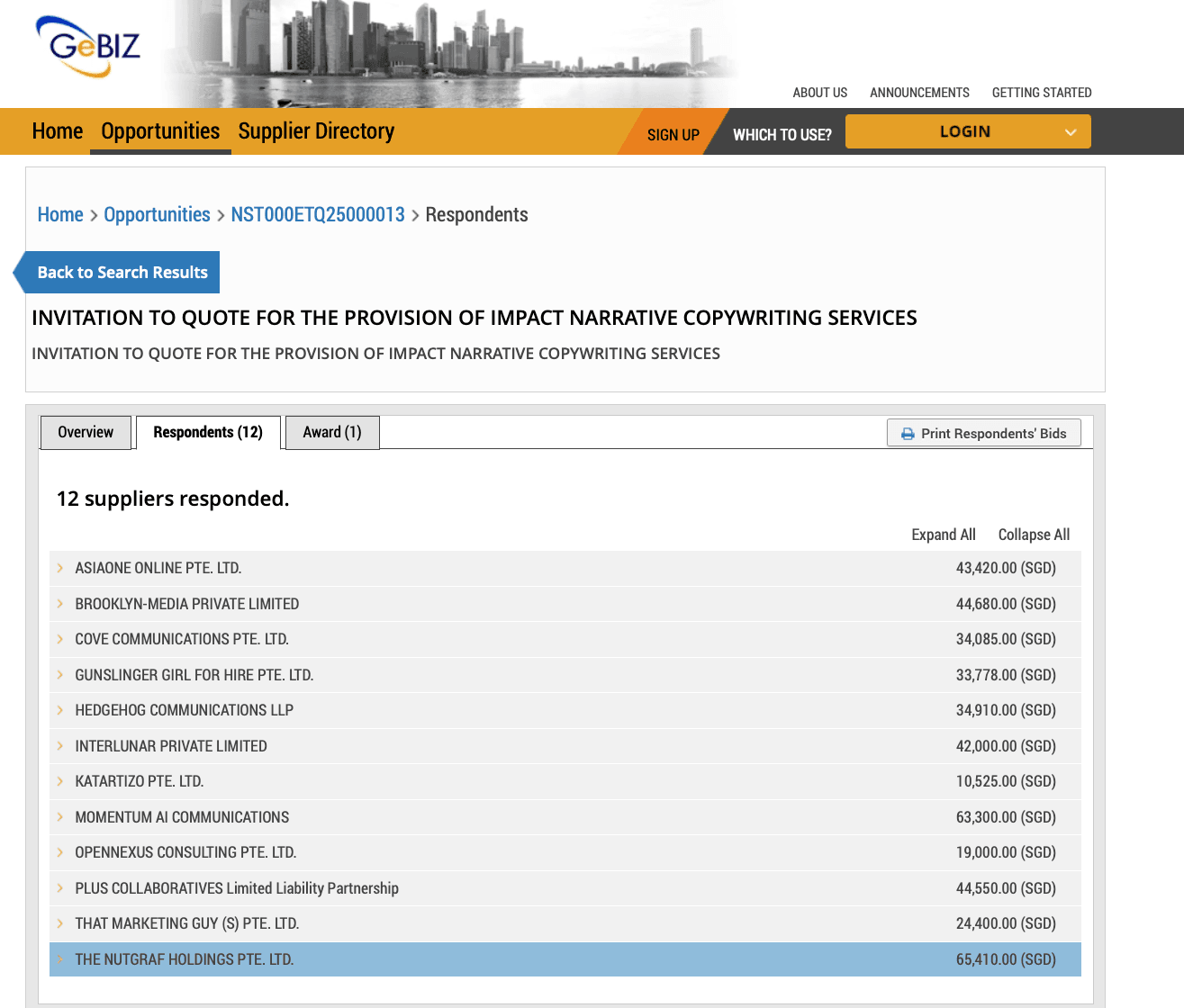
Thus, despite the cheaper writing agencies who bidded, (and yes, even though it was as cheap as 10k), we all know where the money eventually went. Nutgraf.
Ultimately, to make a decision around how much to ‘pay for reputation’, some benchmarks can be:
- How much is your agency’s yearly turnover?
- At ASTAR, there was an estimated $251.6m spent on industry R&D. Thus, paying $60k for these impact narratives, to encourage more industries to do R&D with ASTAR, to share the impact of ASTAR, was a smaller drop in the ocean.
- If we lost our reputation, how long would it take to build it back?
When you’re a big organisation, playing the fear card with your bosses might get you what you want.
Someone once told me, “you’re paying an agency, so you can get the work off your mind, and to get peace of mind. Once you pass it to them, it becomes their fault, not yours. You can blame the agency, but you’d hope your agency doesn’t mess up.”
MOE paying for domain experts, from $500 to $1650
Look at what MOE has done, and you’d be amazed. With one of the smallest percentages of national budgets at 2.2%, they have created a world class education system.
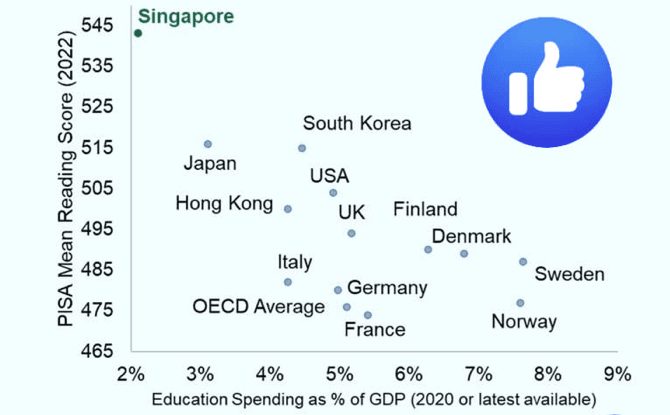
We can see that one of the reasons why is also because they have adopted an ecosystem approach, nurturing not just students, but the wider community around them, like the teachers and the parents. SchoolBag is one example, where they have probed beneath the surface of how teachers teach, so students learn.

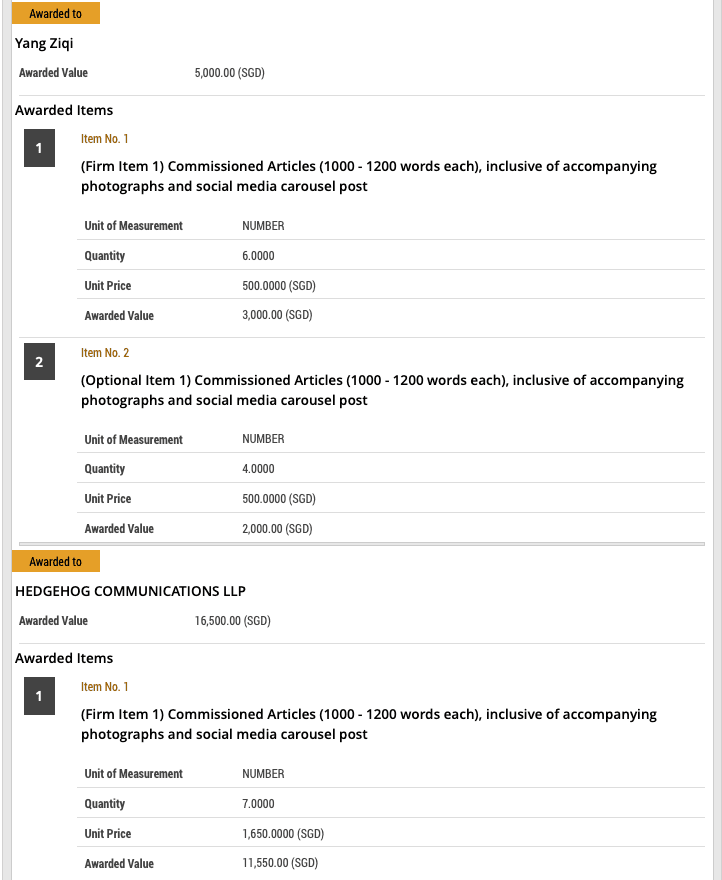
We, writers, need to write better.
But of course, at the end of the day, these numbers we share are so that you’ve an internal idea of what people are charging for content, so that you can have a proper market value of your work.
The point of this is not to say: write for government because they pay much more than commercial players. Rather it’s to take a leaf out of Stacked’s playbook and see that writing only becomes valuable, when you cherish it as a craft. If you’re always seeing it as something to get through, go ahead. Learn how to write better prompts.
But if you genuinely want to write a story that flows, that gives insight, then the answer is not just to figure out how to write faster with the latest gimmick in town – whether that be AI, or otherwise. In fact, these gimmicks have always existed.
There was the typewriter, which some would have thought extracted the thinking process of slowly drawing out those letters. Then the advent of Google’s autocomplete, which listed the best listicles, and which some blamed for the increasing similarity of content, as everyone was copying from the same content.
As always, writing has always been about having a good smell for stories and a taste for what stories meet the cut. It’s how to write better. Marketers have had a field day because of the shortcuts we learnt from black-hat SEO. Now, it’s time to go back to fundamentals.
Want to earn more? Write better.